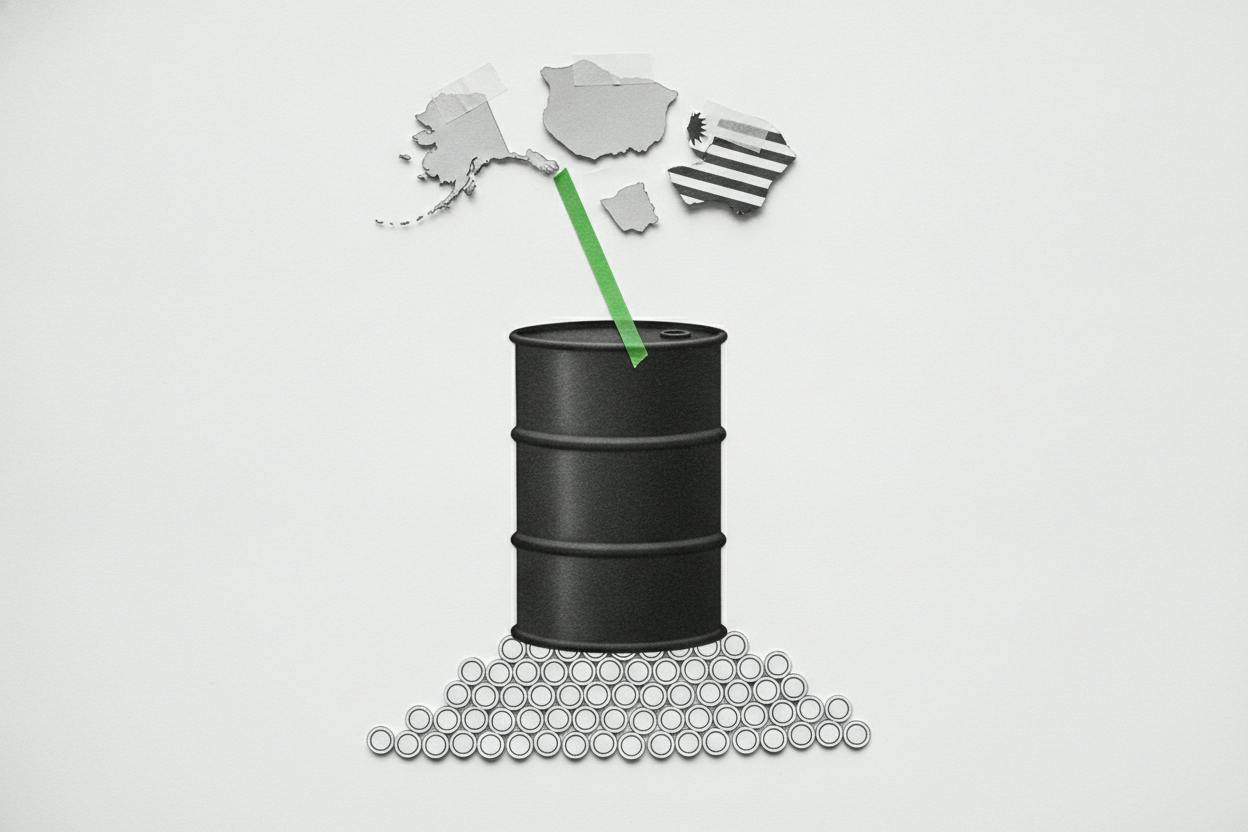
RBC Capital Markets has resumed research coverage of energy giant Shell, issuing a sector perform rating and a £40 price target after incorporating the company's planned acquisition of Canadian producer ARC Resources into its financial models. The bank also lifted its earnings per share (EPS) estimates for 2026 through 2028, signaling confidence that the deal will strengthen Shell's long-term position in liquefied natural gas (LNG) and other key areas.
What the ARC Deal Means for Shell
Shell announced its $16.4 billion acquisition of ARC Resources earlier this year, a move that received overwhelming shareholder approval with 99.54% of votes in favor. The deal gives Shell a significant foothold in Canada's Montney shale region, one of North America's most prolific natural gas basins. RBC analysts believe this acquisition addresses a critical question facing major oil and gas companies: how to demonstrate "portfolio longevity"—the ability to sustain cash flow from existing assets for years to come, rather than relying solely on returning cash to shareholders through dividends and buybacks.
In a note to clients, RBC highlighted that the ARC deal strengthens Shell's liquids production profile and could secure additional feed gas for a potential expansion of LNG Canada's Phase 2 project. LNG Canada, a joint venture led by Shell, is already under construction in Kitimat, British Columbia, and is expected to begin exporting liquefied natural gas later this decade. A second phase would double its capacity, requiring a reliable supply of natural gas—something ARC's Montney assets can provide.
RBC's Revised Outlook
After updating its financial model to reflect the acquisition, RBC raised its EPS projections for Shell for the 2026-2028 period. The bank maintained its sector perform rating, which is roughly equivalent to a "hold" recommendation, suggesting that Shell shares are fairly valued at current levels. The £40 price target implies modest upside from recent trading prices, though the stock has already risen in anticipation of the deal's closing.
The acquisition comes at a time when corporate deal activity has been surging across sectors, with Shell, Uber, and KKR among the leaders in recent transactions. For Shell, the ARC deal is part of a broader strategy to bolster its position in natural gas and LNG, which the company sees as a bridge fuel in the global energy transition. Natural gas emits about half the carbon dioxide of coal when burned, making it a key component of many countries' plans to reduce emissions while maintaining energy security.
What It Means for Investors
For everyday investors, RBC's analysis offers a few key takeaways. First, the raised EPS estimates suggest that the ARC acquisition is expected to be accretive to Shell's earnings within a few years, meaning it should boost profit per share. Second, the focus on LNG highlights a long-term growth driver that could provide stable cash flows, especially as demand for natural gas rises in Asia and Europe.
However, the sector perform rating also implies that much of the good news may already be priced into Shell's stock. Investors should watch for the deal's completion, which is expected later this year, and for any updates on LNG Canada Phase 2. Shell's ability to integrate ARC's assets smoothly and manage its debt load will be critical to realizing the projected benefits.
Shell's move into Canadian natural gas also reflects a broader industry trend: major oil and gas companies are increasingly investing in North American LNG export capacity to meet global demand. This could create opportunities for investors in energy infrastructure and related sectors, though it also carries risks tied to commodity prices and regulatory changes.
RBC's report is one of several analyst updates following the ARC deal. Investors should consider multiple perspectives and their own risk tolerance before making decisions. As always, past performance and analyst projections are not guarantees of future results.