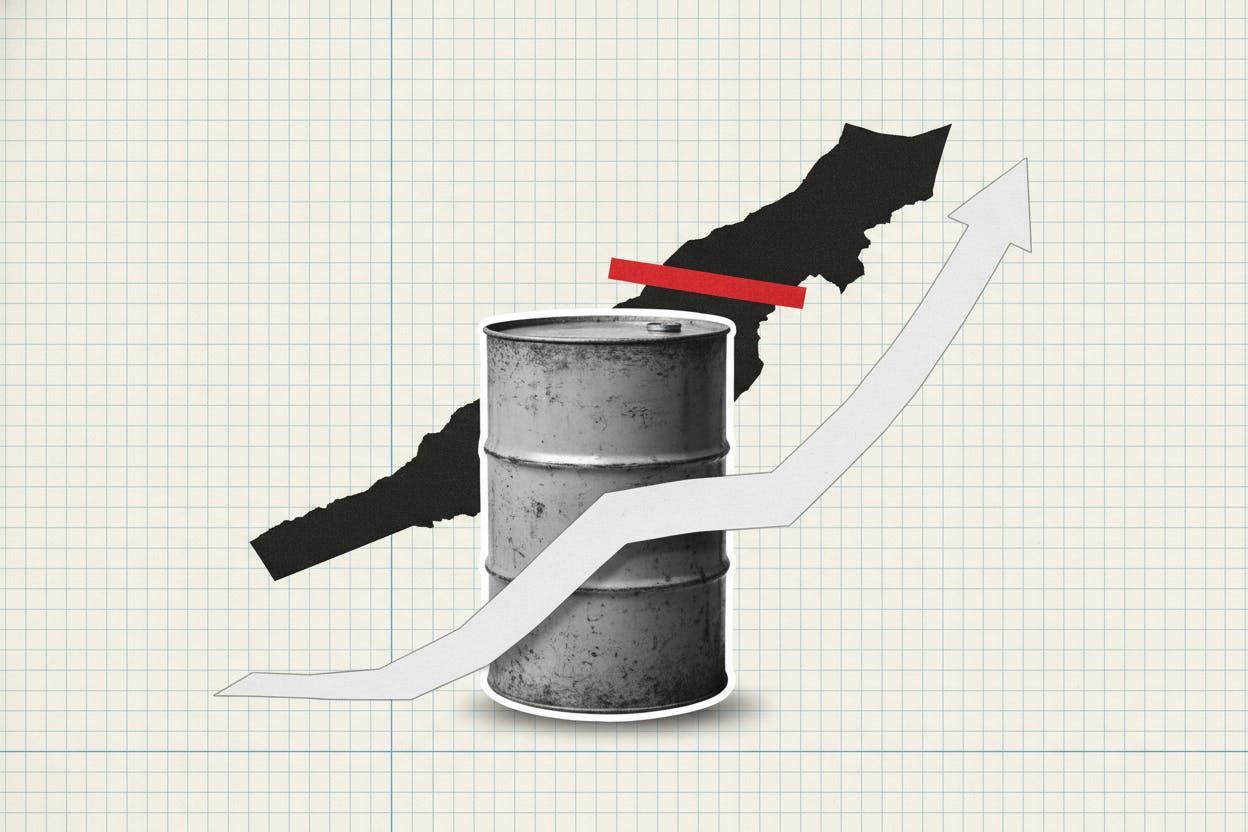
Oil prices are treading water below $86 a barrel, as traders digest two powerful but conflicting forces: escalating US military strikes on Iran and a surprisingly mild US inflation report that has boosted confidence in easier monetary policy ahead.
Brent crude, the global benchmark, stayed little changed on the day, hovering just under the $86 mark. The lack of a sharp move higher may seem odd given the geopolitical backdrop, but it reflects a market that is carefully balancing immediate supply risks against signs of cooling demand and the prospect of lower interest rates.
Geopolitical Tensions vs. Economic Signals
The United States has now conducted strikes on Iran for four consecutive days, a significant escalation in the region. President Donald Trump has also threatened to target Iranian bridges and power plants unless negotiations resume, adding to the uncertainty. However, he simultaneously dropped a plan to impose a 20% toll on ships transiting the Strait of Hormuz, a key chokepoint for global oil shipments.
That reversal may have taken some of the immediate sting out of the supply-risk premium. As Commerzbank analysts noted, Brent remained largely unchanged despite the ongoing strikes, suggesting that the market is not yet pricing in a major disruption to oil flows.
Meanwhile, the front end of the US Treasury curve held onto gains after a US inflation report that officials described as “surprisingly benign.” The Consumer Price Index (CPI) came in cooler than expected, reinforcing the view that the Federal Reserve may be able to cut interest rates sooner rather than later. Lower rates typically weaken the dollar and can support oil demand by making borrowing cheaper for businesses and consumers.
What This Means for Investors
For everyday investors, the standoff in oil prices is a reminder that markets do not always react in a straight line to headlines. Geopolitical risk is real, but it is often offset by broader economic trends.
If the Middle East situation escalates further and threatens actual supply—say, through a blockade of the Strait of Hormuz—oil could spike quickly. But for now, the market seems to be betting that the conflict will remain contained. The return of backwardation in Brent, where near-term contracts trade at a premium to later ones, does suggest some tightness, but not panic.
On the other hand, a benign inflation reading is good news for risk assets broadly. It reduces the pressure on the Fed to keep rates high, which can support stock valuations and economic growth. The rally in Latin American markets following the CPI data shows how lower US inflation can lift emerging-market currencies and equities.
For oil specifically, lower rates could eventually boost demand, but that effect takes time. In the near term, the market is more focused on the tug-of-war between supply fears and demand uncertainty.
Broader Market Context
The oil market is not operating in a vacuum. Other commodities and currencies are also reacting to the same crosscurrents. The South African rand, for instance, held steady near 16.39 against the dollar as traders awaited US producer price data, while a Westpac survey showed 60% of New Zealanders still feel the Middle East conflict in their budgets, highlighting the real-world impact of higher energy costs.
In Asia, a rally in chip stocks lifted emerging markets, driven by a strong forecast from ASML, the Dutch semiconductor equipment maker. That shows how tech and AI optimism can sometimes overshadow geopolitical jitters.
Meanwhile, Chinese stocks were split as rising Middle East tensions clashed with Beijing's ambitious target of 60 trillion yuan in retail sales, underscoring the delicate balance between external risks and domestic policy support.
What to Watch Next
Investors should keep an eye on two key things. First, any further escalation in the US-Iran conflict, especially if it threatens the Strait of Hormuz, could send oil prices sharply higher. Second, the path of US inflation and interest rates will remain critical. If the benign CPI trend continues, it could support both bonds and equities, and eventually boost oil demand.
For now, the message from the market is one of caution. Oil is stuck below $86 because the bulls and bears are evenly matched. That could change quickly, but for the moment, traders are waiting for a clearer signal.