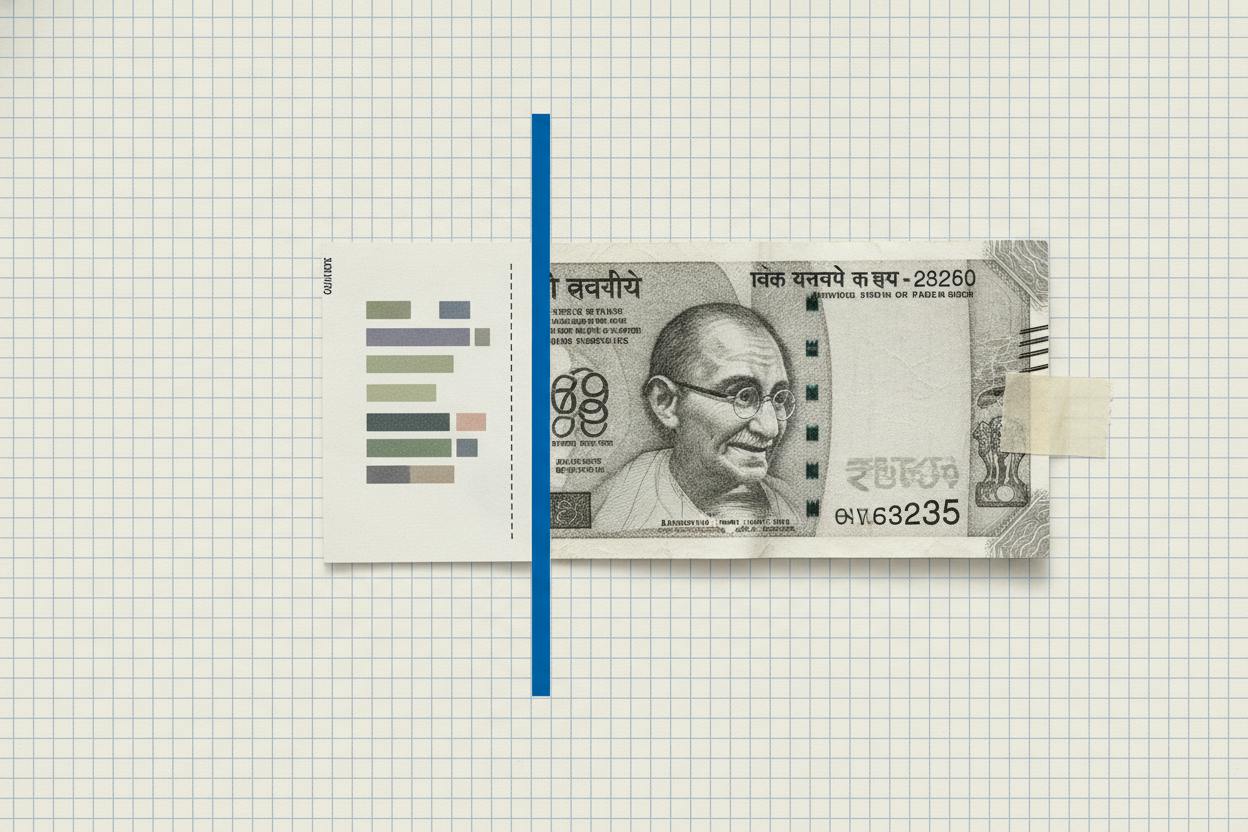
India's central bank has moved to clear up confusion over its new foreign-exchange reporting rules for services trade, publishing a set of frequently asked questions (FAQs) that spell out exactly when exporters and banks must file paperwork.
The Reserve Bank of India (RBI) introduced its services trade reporting framework in January, and it took effect on October 1st. But the rollout left many exporters and lenders unsure which transactions required declarations and how the rules applied in practice. The new FAQs, released on Friday, address those questions directly.
What the new guidance says
The key clarification concerns the 1 million-rupee threshold (roughly $10,761). The RBI confirmed that this cutoff is tested per inward remittance—meaning each individual incoming payment is assessed separately, rather than adding up all receipts over a period. That distinction matters for exporters who receive multiple smaller payments from the same client: each payment under the threshold may not trigger the reporting requirement, even if the total for the month exceeds it.
The FAQs also clarify when exporters must file an export declaration form. Under the framework, exporters of services are required to submit this form for certain transactions, and the new guidance lays out the specific circumstances. The RBI had already said earlier this month that resident individuals do not need to file these declarations, and that the threshold applies to certain reporting obligations.
For banks, the FAQs provide much-needed clarity on their role in collecting and verifying the declarations. Banks are the intermediaries that process the remittances, and they are responsible for ensuring compliance with the reporting framework. The new guidance helps them determine which transactions require the form and which can be processed without it.
Why the RBI is doing this
The services trade reporting framework is part of a broader effort by the RBI to modernise and streamline how India tracks foreign-exchange transactions. Services exports—ranging from IT and software to consulting and financial services—are a major part of India's economy, and accurate data is essential for policymakers to understand capital flows and trade balances.
The framework replaces older, more fragmented reporting systems with a unified approach. By setting clear thresholds and rules, the RBI aims to reduce the administrative burden on exporters while still capturing the data it needs. The October 1st rollout was the first phase, and the FAQs are a response to the teething problems that often accompany new regulations.
The clarification comes at a time when India's currency and markets are in focus. The rupee has been under pressure, and the RBI has been managing foreign-exchange reserves carefully. Accurate reporting of services trade helps the central bank gauge the true scale of inflows and outflows, which feeds into its decisions on currency intervention and monetary policy.
What it means for investors
For everyday investors, this is not a story that will move stock prices overnight, but it has practical implications for anyone involved in cross-border services trade—whether as a business owner, freelancer, or investor in export-oriented companies.
If you run a small consultancy or IT services firm that bills clients abroad, the key takeaway is that each payment you receive is judged against the 1 million-rupee threshold on its own. That means you may not need to file an export declaration for every single invoice, but you should keep track of your receipts to ensure you comply when the threshold is crossed.
For investors in Indian services companies, the new rules are largely a compliance matter rather than a fundamental driver of earnings. However, smoother reporting could reduce administrative costs and delays in receiving export payments, which is a modest positive for cash flow. The RBI's clarification also signals that the central bank is listening to feedback and willing to adjust its approach, which reduces regulatory uncertainty.
It's worth noting that the RBI's move comes amid broader market turbulence. Global markets have been volatile, with Asian stocks sliding as the AI trade cools and the dollar stays strong. Indian equities have also slipped from nine-month highs as investor sentiment shifts. In this environment, any clarity on regulatory rules is a small but welcome stabiliser for businesses that rely on foreign exchange.
What to watch next
The RBI is likely to issue further guidance as the framework matures. Exporters and banks should monitor updates from the central bank, especially if they operate in sectors with high transaction volumes. The next phase of the framework may extend reporting requirements to other types of transactions, so staying informed is key.
For now, the message is clear: the rules are being refined to be more practical, and the RBI is committed to making the transition as smooth as possible. For the average investor, this is a reminder that regulatory changes—even those that seem technical—can have real effects on how businesses operate and how money moves across borders.