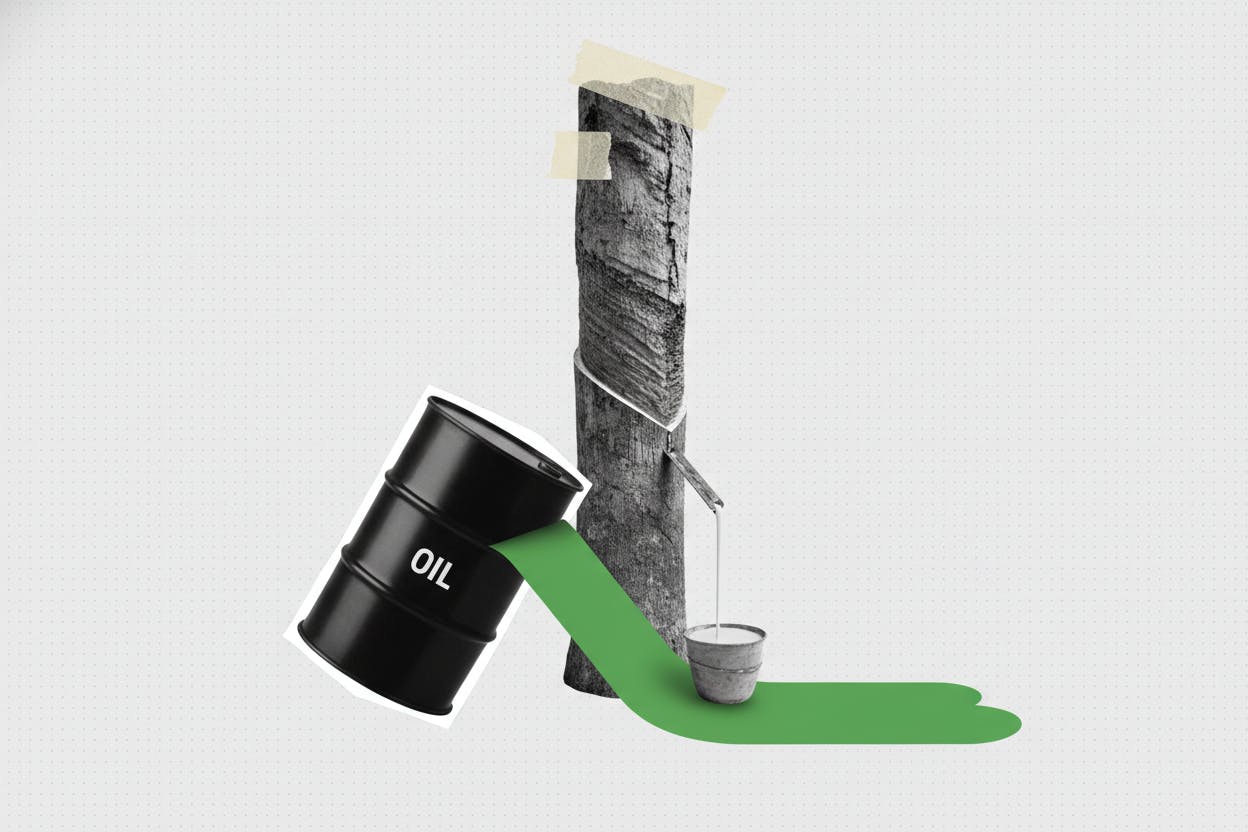
Rubber markets are sending mixed signals this week, with prices moving in opposite directions on key exchanges. Osaka futures fell as Thailand's peak tapping season ramps up supply, while Shanghai contracts held steady as crude oil prices extended their rally for a fourth consecutive day amid fears of disruption in the Strait of Hormuz.
What's driving the split?
Rubber is not a single commodity but two closely linked markets: natural rubber, harvested from rubber trees, and synthetic rubber, made from oil-based chemicals. This week's divergence reflects the tug-of-war between these two forces.
On the Osaka Exchange, December natural rubber futures slipped to 430.9 yen per kilogram. Traders are looking past recent gains and focusing on the seasonal wave of output from Thailand, the world's largest producer. Harvests typically accelerate through September, and the current peak tapping season is expected to keep supply abundant.
In contrast, Shanghai's September natural rubber contract was roughly flat at 17,100 yuan per metric ton. But the real action was in synthetic rubber: September butadiene rubber jumped to 13,825 yuan per metric ton, driven by higher crude oil prices. Crude has risen for four straight days on concerns about potential disruptions in the Strait of Hormuz, a critical chokepoint for global oil shipments. This has pushed up the cost of key inputs for synthetic rubber.
How the two rubber markets interact
The relationship between natural and synthetic rubber is important for investors to understand. When synthetic rubber gets more expensive, some buyers—particularly tire manufacturers—can switch a portion of their demand back toward natural rubber. This substitution effect can limit how far natural rubber prices fall, even when supply from Thailand is abundant.
The result is less about a single "rubber price" and more about a moving gap between benchmarks. This divergence is also visible in Singapore's SICOM exchange, where the August contract traded at 217.5 US cents per kilogram.
This kind of split is a reminder to watch spreads, not just headlines. Oil-linked synthetic rubber can rise quickly when energy markets get jittery, lifting manufacturers' costs and nudging some end-users to substitute toward natural rubber at the margin. At the same time, Thailand's peak tapping season tends to weigh on tree-based supply and pressures prices on exchanges like Osaka and Singapore that are more sensitive to the physical harvest.
What it means for investors
For everyday investors, the key signal to watch is the natural-versus-synthetic gap on Shanghai (17,100 yuan vs 13,825 yuan) and the divergence versus Osaka (430.9 yen) and SICOM (217.5 US cents). This spread can remain volatile while seasonal supply and oil risk pull in opposite directions.
The broader context also matters. Rising oil prices have been a theme across markets recently, with crude's rally affecting everything from Australian shares to consumer spending. Higher energy costs can feed into inflation, which central banks are watching closely. The Bank of Canada recently held rates partly due to sticky inflation from oil prices, and the New York Fed has noted that energy prices are a key variable in the inflation outlook.
For now, rubber markets are caught between two opposing forces: a supply wave from Thailand and an oil-driven cost push. Investors should keep an eye on the spreads, as they may offer clues about where prices are headed next.



