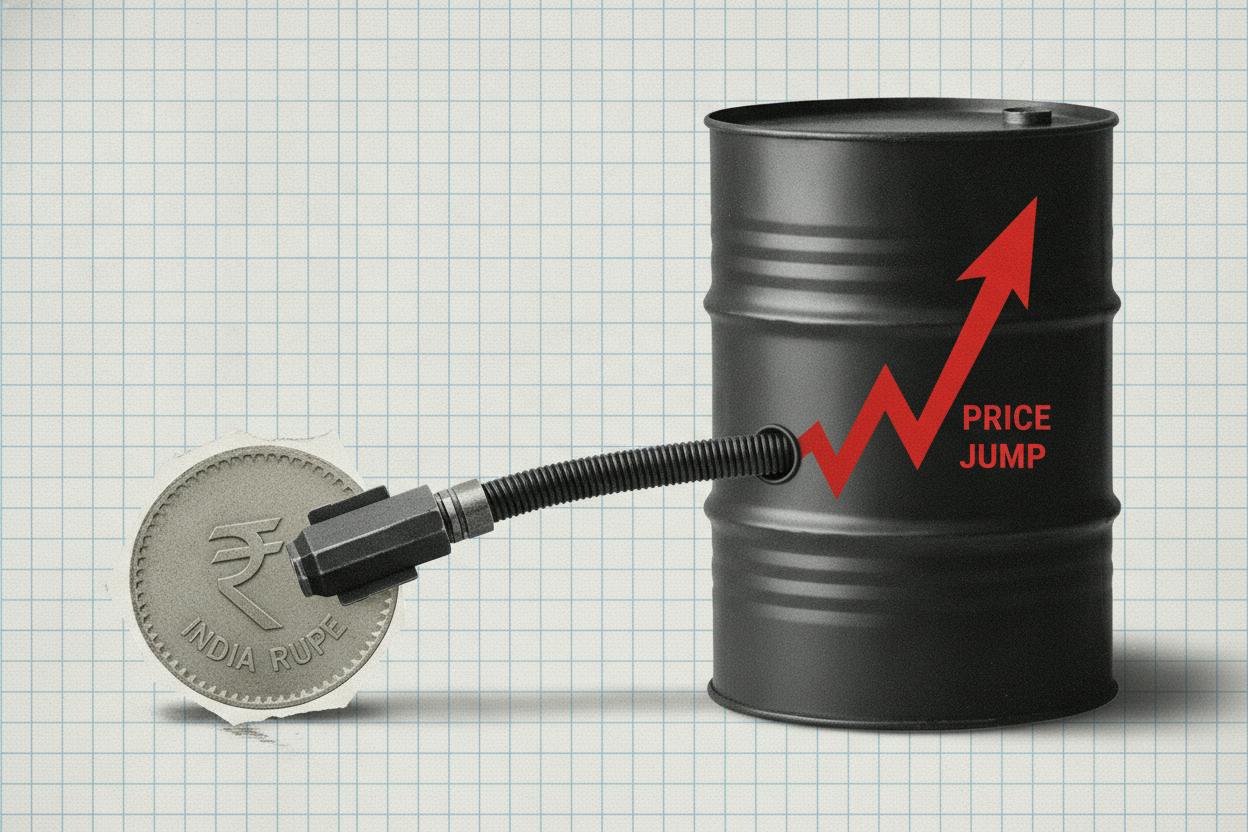
India's rupee gave back its early gains on Tuesday, hovering near 94.87 per US dollar, as a rebound in global oil prices weighed on the currency. Brent crude climbed 2% to $107 a barrel after reports of fresh US strikes on Iran, reigniting concerns about supply disruptions in the Middle East.
The move underscores how sensitive the rupee remains to oil prices, given that India imports roughly 80% of its crude oil needs. When oil prices rise, the country's import bill swells, which can widen the trade deficit and put downward pressure on the currency.
Oil's bounce and geopolitical tensions
The jump in Brent came after reports that the United States had launched new strikes on Iranian targets. While the details remain fluid, any escalation in the region tends to spook energy markets because of the risk of supply disruptions from the Strait of Hormuz, a critical shipping lane for global oil.
For the rupee, higher oil prices are a double-edged sword. Not only do they increase the cost of imports, but they also can fuel inflation, which may prompt the Reserve Bank of India to keep interest rates higher for longer. That, in turn, can affect economic growth and corporate earnings.
This is not the first time the rupee has been caught between oil swings and geopolitical headlines. Earlier, the dollar steadied as oil stabilized, but the current bounce has shifted the focus back to energy prices.
Election jitters add to the mix
Beyond oil, the rupee is also navigating domestic political uncertainty. With elections looming, investors are watching for any policy shifts that could affect fiscal discipline or foreign investment flows. Election periods often bring volatility, as markets price in potential changes in government spending and reform momentum.
Analysts say the rupee's recent calm may be masking deeper investor caution. As one market observer noted, the rupee's stability could be hiding concerns about further falls if oil keeps climbing or if election outcomes surprise.
What this means for investors
For everyday investors, a weaker rupee has several knock-on effects. It makes imported goods more expensive, which can feed into inflation and affect the prices of everything from electronics to packaged foods. It also reduces the returns on foreign investments when converted back to rupees, which can influence foreign institutional flows into Indian stocks and bonds.
On the flip side, a weaker rupee can benefit exporters, including IT services companies and pharmaceutical firms that earn in dollars but incur costs in rupees. Their earnings can get a boost when the rupee depreciates.
Investors with exposure to international funds or US stocks should also keep an eye on currency movements, as a falling rupee can erode the value of overseas holdings when measured in local terms.
Looking ahead
The near-term direction of the rupee will likely hinge on oil prices and geopolitical developments. If tensions in the Middle East ease and crude retreats, the rupee could find some support. Conversely, any further escalation could push oil higher and add more pressure on the currency.
Market participants will also be watching the US dollar's broader trend. A stronger dollar typically weighs on emerging market currencies, including the rupee. Recent moves in the dollar have been mixed, with the dollar slipping when oil dropped, but the current oil bounce could change that dynamic.
For now, the rupee remains in a wait-and-see mode, with traders balancing oil's rise against any potential diplomatic breakthroughs. As always, the key is to stay informed and avoid making hasty decisions based on short-term currency swings.