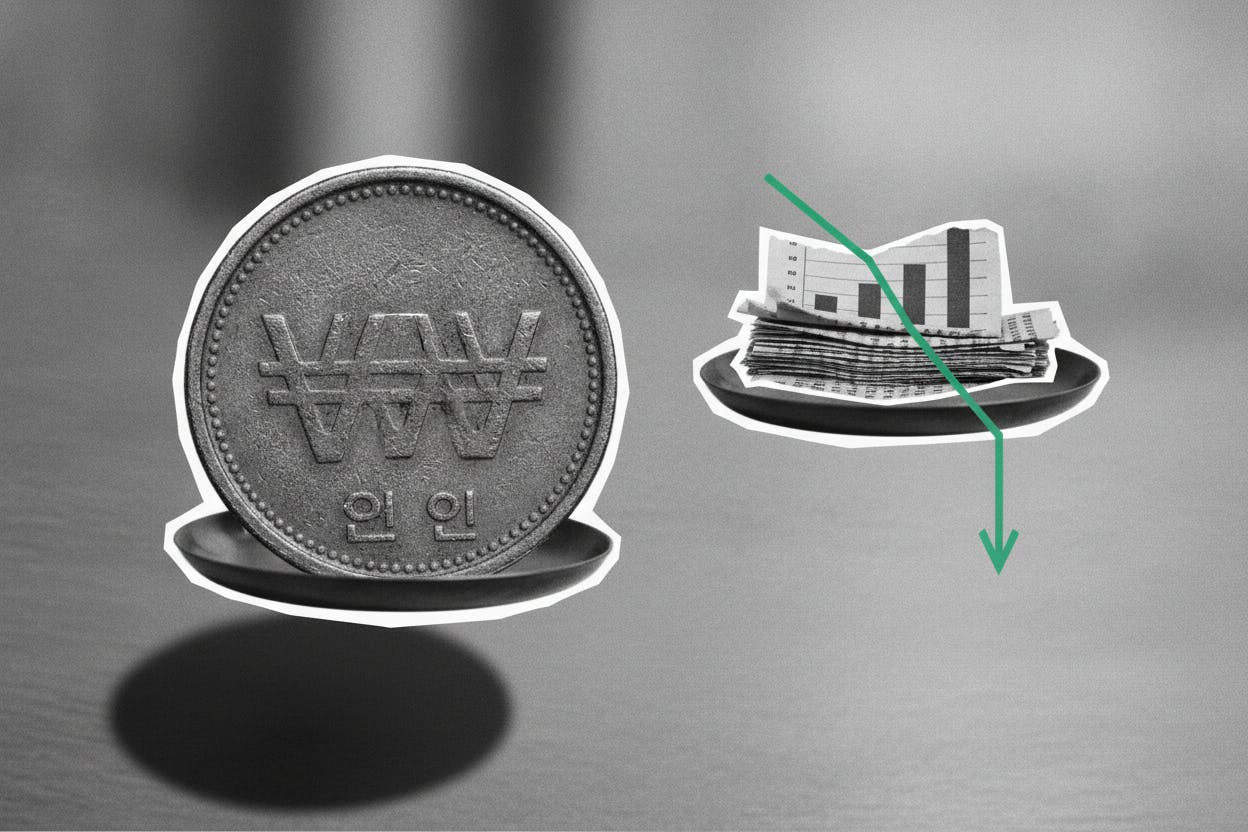
South Korean consumers felt a bit more optimistic in July, even as the central bank raised interest rates. The Bank of Korea's latest survey shows the Composite Consumer Sentiment Index (CCSI) inched up to 106.8 from 106.6 in June, signaling a modest improvement in household confidence.
The index, which measures how people feel about current and future economic conditions, remains above the 100 mark that separates optimism from pessimism. A reading above 100 means more consumers are positive than negative about the economy.
Inflation expectations cool despite rate hike
Perhaps more notable for policymakers, one-year inflation expectations dipped to 2.7% from 2.8% in June. That decline came even after the Bank of Korea raised its benchmark interest rate by 25 basis points (0.25 percentage points) earlier this month — a move that typically signals the central bank is worried about rising prices.
The fact that inflation expectations eased suggests households may believe the rate hike will help keep price pressures in check. Lower inflation expectations are important because they can influence actual spending and wage demands, making it easier for the central bank to achieve its 2% inflation target over time.
South Korea's economy has been navigating a tricky period of elevated inflation and slowing growth. The Bank of Korea has been gradually raising rates to cool the economy and bring down inflation, but policymakers must balance that against the risk of hurting domestic demand.
What the survey details show
The Bank of Korea survey, reported by MT Newswires, revealed a mixed picture beneath the headline number. Consumers were slightly more hopeful about the year ahead, with expectations for future living standards and income both ticking higher. However, views of current economic conditions and living standards softened somewhat.
This split suggests that while households see brighter days ahead, they are still feeling the pinch from higher prices and borrowing costs today. South Korea's consumer price inflation has been running above the central bank's target, squeezing household budgets and weighing on spending.
The KOSPI, South Korea's main stock index, has been volatile this year, partly due to concerns about global demand for the country's key exports like semiconductors. Recent moves in chip stocks have been a major driver of the index, and any shift in consumer confidence can affect domestic-oriented companies.
What it means for investors
For everyday investors, the modest uptick in consumer sentiment is a mildly positive signal for South Korea's domestic economy. If households feel more confident, they may be more willing to spend, which supports companies that rely on local consumers — such as retailers, restaurants, and consumer goods firms.
However, the improvement is small, and the survey also showed that current conditions remain subdued. The Bank of Korea's rate hike earlier this month will take time to feed through to the economy, potentially dampening spending and investment in the months ahead.
Investors should also keep an eye on inflation expectations. If they continue to fall, it could reduce pressure on the central bank to keep raising rates, which would be positive for both stocks and bonds. But if inflation proves sticky, further rate hikes could weigh on economic growth and corporate profits.
South Korea's economy is also heavily influenced by global trade, particularly in technology and semiconductors. Recent concerns about competition from China have hit chip stocks, and any broader slowdown in global demand could offset the positive impact of stronger domestic sentiment.
For now, the data suggests the South Korean consumer is holding up reasonably well, but the path ahead depends on how inflation, interest rates, and global trade dynamics evolve in the coming months.