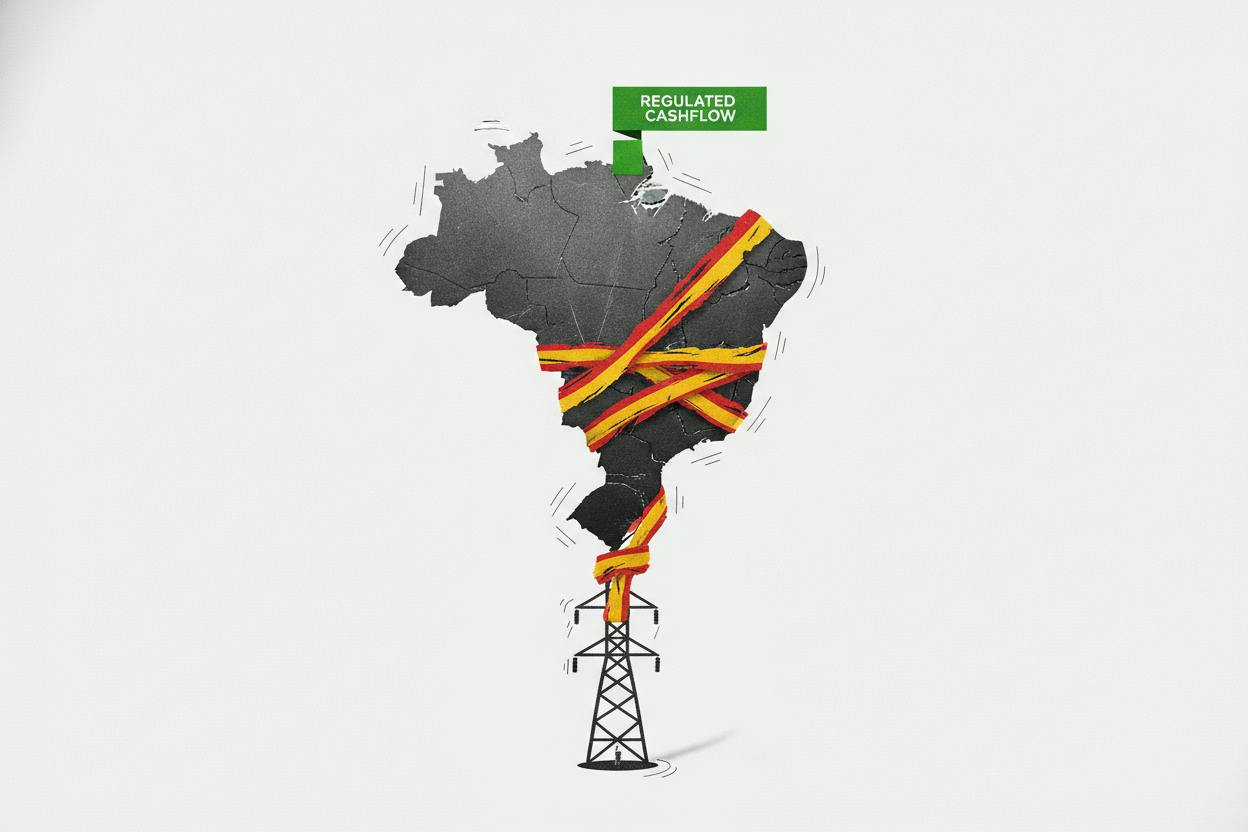
Spanish-backed utilities dominated Brazil's latest power transmission auction, winning seven of the eight projects on offer and committing 8.56 billion reais (about $1.5 billion) of the 8.9 billion reais total investment pledged, according to Reuters. The auction, held on Friday, is part of Brazil's broader push to expand and modernize its electricity grid, a key step for integrating new renewable energy sources and improving reliability.
What happened at the auction
Brazil regularly holds transmission auctions to award concessions for building and operating new power lines, substations, and other grid infrastructure. These projects are typically long-term contracts, with winners earning steady revenue from regulated tariffs. The strong showing by Spanish firms—likely including major utilities with existing operations in Latin America—underscores their appetite for Brazilian infrastructure assets.
The 8.56 billion reais committed by Spanish-backed bidders represents roughly 96% of the total 8.9 billion reais pledged across all winning bids. That leaves a small slice for other participants, highlighting how competitive and well-capitalized the Spanish players are in this space.
Why Brazil's grid matters
Brazil's electricity grid is one of the largest in the world, and it is undergoing significant expansion. The country has been adding wind and solar capacity at a rapid pace, but those renewable sources are often located far from major consumption centers. New transmission lines are essential to carry that power to cities and industrial hubs. The government has also prioritized grid upgrades to reduce the risk of blackouts and to support economic growth.
For investors, transmission auctions are a window into how much capital is flowing into Brazil's infrastructure. The fact that foreign utilities are willing to commit billions of reais suggests confidence in the country's regulatory framework and long-term demand for electricity. However, it also comes against a backdrop of fiscal uncertainty in Brazil, as markets have been jittery over the government's spending plans. Recent market slides tied to fiscal concerns show how sensitive investors are to policy signals.
What it means for investors
For everyday investors, this auction is a reminder that infrastructure projects can offer steady, predictable returns—but they come with risks. Transmission companies earn regulated revenue, which means their cash flows are relatively stable compared to, say, commodity producers. That can make them attractive to income-focused investors, especially in a world where interest rates are uncertain.
However, investing in Brazilian infrastructure carries currency risk. The real has been volatile, and a weaker currency can erode returns for foreign investors. The recent weakness in the real is a reminder of that dynamic. Additionally, regulatory changes and political interference are always possible in emerging markets.
For those who want exposure to this trend without picking individual stocks, broader emerging-market infrastructure funds or ETFs might be an option. But as always, it's important to understand the specific risks involved.
The bigger picture
The auction's outcome also highlights the growing role of Spanish utilities in Latin America. Companies like Iberdrola and Naturgy have long had a presence in the region, and this result suggests they see Brazil as a key growth market. That is consistent with a broader pattern of European energy firms seeking opportunities abroad as domestic growth slows.
For Brazil, the influx of foreign capital is a positive sign. It shows that despite political and economic headwinds, the country can still attract investment in critical infrastructure. The challenge will be ensuring that these projects are delivered on time and on budget, and that the regulatory environment remains stable.
Investors should watch for further details on the winning bidders and the specific projects, as well as any updates on Brazil's fiscal situation. The auction is a single data point, but it fits into a larger narrative of a country trying to balance growth, investment, and fiscal discipline.