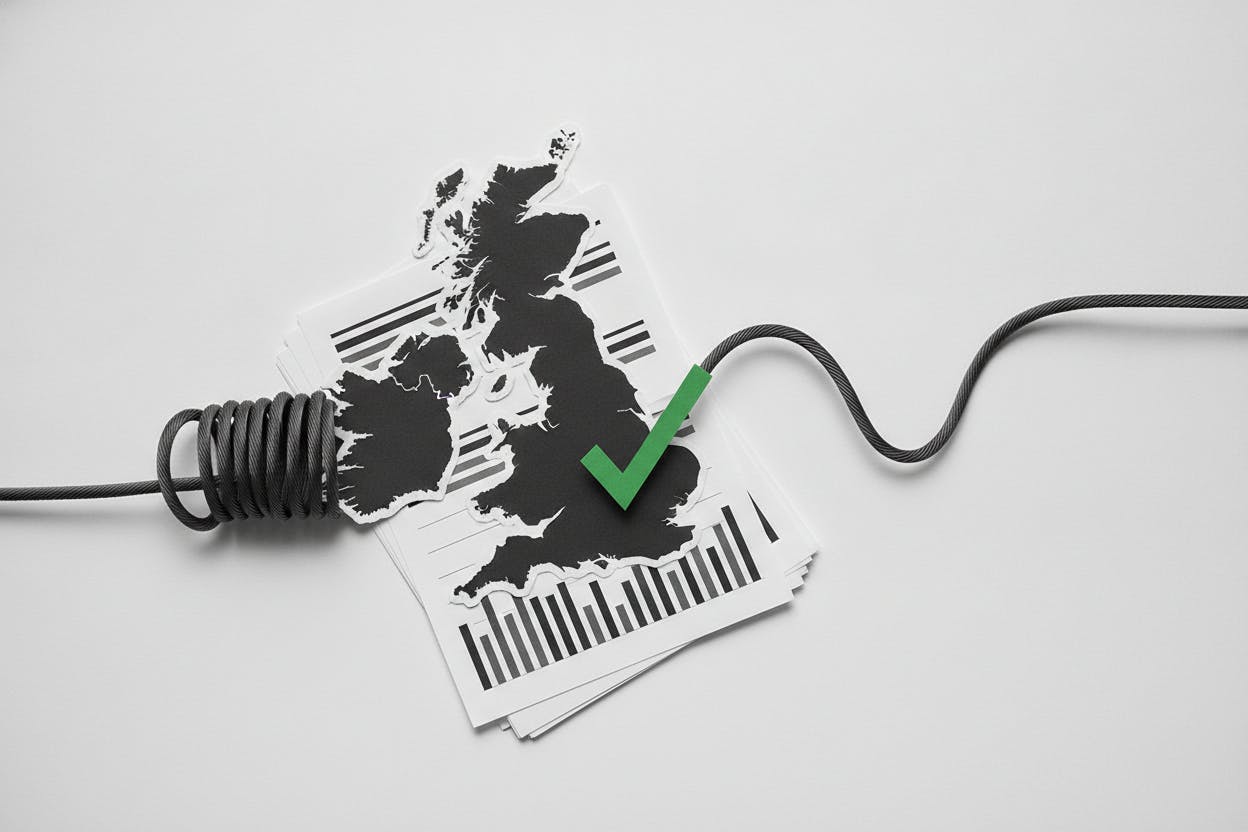
UK business confidence picked up in July, helped by lower energy costs and a ceasefire in the Iran war that gave companies some relief from recent uncertainty. A Lloyds survey of 1,200 businesses, conducted online by Ipsos from July 1 to July 16, found that morale rose 5 points to +49, just above the 12-month average of +47.
The improvement was driven by a sharp jump in optimism about the wider economy, which climbed 11 points to +42. Lloyds senior economist Hann-Ju Ho attributed the shift to a steadier global backdrop, lower energy prices, and reduced uncertainty following the ceasefire.
Energy costs and global tensions
Energy prices have been a major concern for UK businesses over the past year, as higher costs squeezed margins and dampened investment plans. The recent ceasefire in the Iran war helped ease those pressures by calming fears of supply disruptions in the oil market. That allowed energy prices to dip, giving companies more breathing room on their operating expenses.
The improvement in business confidence comes alongside other positive signals in the economy. For context, consumer confidence has also been rising in some regions, though inflation fears remain a concern. In Europe, the eurozone economy grew 0.4% in the second quarter, beating forecasts despite higher energy costs earlier in the year.
However, not all news has been favorable. German inflation rose to 2.8% in July as energy costs jumped, clouding the recovery outlook for Europe's largest economy. That contrast highlights how sensitive business sentiment remains to energy price movements.
What this means for investors
For everyday investors, rising business confidence is generally a positive sign for the UK economy. When companies feel more optimistic, they are more likely to invest in expansion, hire new staff, and increase production. That can boost corporate earnings and, over time, support stock prices.
The survey's focus on energy costs is particularly relevant given the energy sector's outsized role in European profit growth recently. Lower energy prices can benefit a wide range of industries, from manufacturing to retail, by reducing input costs. But they can also weigh on energy company profits, as seen in the scaling back of clean energy pushes by some firms.
The Bank of England has been closely watching energy-driven inflation pressures. The central bank recently held its key interest rate at 3.75%, with three officials warning about energy-driven inflation. If energy prices stay lower, that could reduce the need for further rate hikes, which would be a relief for borrowers and businesses alike.
Broader economic backdrop
The UK economy has faced headwinds from high inflation, rising interest rates, and geopolitical tensions over the past year. But the latest Lloyds survey suggests that the worst may be passing, at least for now. The ceasefire in the Iran war has removed one major source of uncertainty, and lower energy prices are providing a tangible boost to company finances.
Investors should watch for further data on energy prices, inflation, and business surveys in the coming months. If confidence continues to improve, it could signal a broader economic recovery that supports stock market gains. However, risks remain, including the possibility of renewed geopolitical tensions or a rebound in energy costs.
Overall, the July Lloyds survey offers a cautiously optimistic picture for the UK economy. For investors, it suggests that the worst of the energy-driven headwinds may be easing, though vigilance is still warranted.