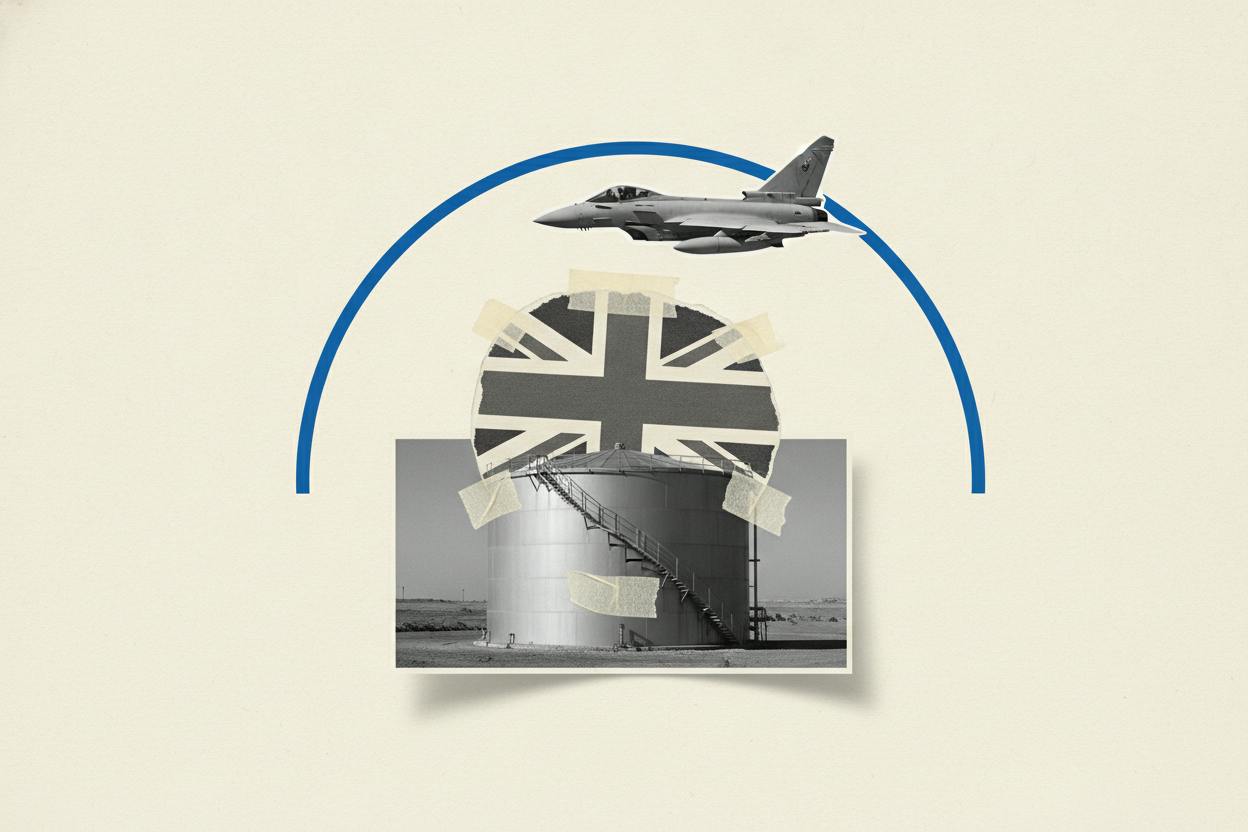
The United Kingdom announced it will send Royal Air Force Typhoon fighter jets to conduct defensive counter-air missions over Saudi Arabia, a move aimed at helping the kingdom deter Houthi attacks and protect its cities and critical infrastructure. The deployment is explicitly framed as defensive, not offensive, with British officials stressing the jets are there to shield, not to strike.
What the deployment signals
The decision to position Typhoons in the region comes amid ongoing tensions in the Middle East, where Houthi forces have periodically launched attacks on Saudi targets. By framing the mission as purely defensive, the UK is signaling a desire to contain the situation rather than escalate it. This distinction matters for markets, because it suggests the focus is on protecting key energy infrastructure rather than engaging in a broader conflict that could disrupt oil exports.
For investors, the key takeaway is that the market is reading this as a risk-management move. The presence of defensive air patrols can lower the tail risk of a sudden supply outage, even if the headlines sound alarming. That helps explain why oil prices did not spike on the news.
Oil prices and energy stocks react
In fact, oil prices moved lower. Front-month West Texas Intermediate crude fell 1.8% to $101.79 a barrel, while Brent slipped 0.4% to $109.15. The decline suggests traders did not see an immediate threat to physical supply. Instead, they focused on the possibility that the defensive posture could reduce the odds of a disruptive attack on Saudi oil facilities.
Energy equities mirrored that mixed sentiment. The NYSE Energy Sector Index was slightly higher, while the Energy Select Sector SPDR Fund (XLE) was a touch lower. Oilfield services companies fared better than producers, a pattern that often emerges when investors are uncertain about the direction of crude prices but still see activity in the sector.
This divergence highlights a broader truth: energy stocks do not always move in lockstep with oil prices. Companies that provide equipment and services to drillers can benefit from ongoing investment even if crude prices are flat, while producers are more directly exposed to the price of the commodity itself.
What it means for investors
For everyday investors, the lesson here is that geopolitical headlines do not automatically translate into higher oil prices or energy stock gains. The market is constantly asking a simple question: what are the odds that barrels of oil do not show up? If a news event does not meaningfully change those odds, prices may not react much.
That is why WTI's dip to $101.79 is telling. It shows traders want proof of lost barrels, not just louder headlines. A promise of defensive air patrols over Saudi Arabia can be read as containment: protecting key facilities and lowering the tail risk of a near-term disruption, without signaling a broader fight that could hit exports.
Investors should also keep an eye on related developments. For example, Gulf stocks have slipped on Houthi attacks in the past, showing how regional tensions can ripple through equity markets. And oil prices above $105 have lifted energy stocks when earnings support them, as seen with Halliburton's recent jump.
At the same time, broader market moves can be influenced by energy trends. When oil cools, it can ease inflation concerns and support equities, as seen in a Wall Street rebound led by healthcare when oil prices retreated. Conversely, elevated yields and oil prices can weigh on stocks, as noted in a session where stocks rose on guidance despite high yields.
The bottom line
The UK's deployment of Typhoons to Saudi Arabia is a defensive measure that markets are treating as a stabilizer rather than an escalation. Oil prices softened, and energy stocks were mixed, reflecting a view that the risk of a major supply disruption has not increased. For investors, the takeaway is to focus on actual supply and demand fundamentals rather than reacting to every headline.
As always, geopolitical situations can change quickly, and any shift toward offensive action or a direct threat to oil infrastructure could alter the calculus. But for now, the market's muted response suggests that the defensive posture is being seen as a way to reduce risk, not add to it.