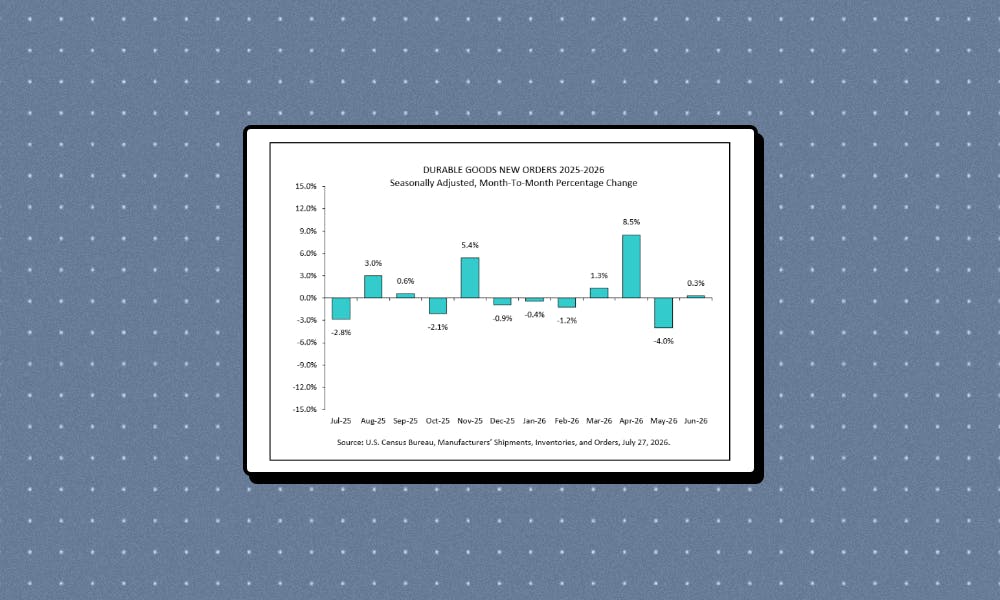
The latest data on US durable goods orders came in below expectations in June, but a closer look at the numbers suggests businesses are still spending on equipment at a steady pace. The Census Bureau reported that orders for long-lasting manufactured goods rose 0.3% last month, falling short of economists' forecasts. The headline figure was dragged down by a drop in demand for defense aircraft and autos.
What the numbers show
Durable goods are products designed to last three years or more, from industrial machinery to computers to airplanes. Because they are big-ticket items, orders can swing sharply from month to month, especially in the transportation category. In June, transportation equipment orders fell 0.2%, driven by a 7.2% decline in defense aircraft and a 0.6% slip in motor vehicles and parts.
But strip out that volatile transportation segment, and the picture looks brighter. Orders excluding transportation rose 0.6% in June. While that also missed expectations, it marks a solid gain that suggests companies are still investing in new equipment. Within that category, computers and electronic products jumped 3.1%, and civilian aircraft orders rose 3.7%.
This kind of split between headline and core is common in durable goods reports. The broader trend matters more for the economy than any single month's number, and the core reading points to continued, if moderate, business investment.
Why business investment matters
Business spending on equipment is a key driver of economic growth. When companies invest in new machinery, computers, or aircraft, they are signaling confidence in future demand. Steady investment also boosts productivity over time, which supports higher wages and corporate profits.
The June report suggests that despite headwinds like higher interest rates and lingering inflation, businesses are not pulling back sharply. That is consistent with other recent data showing the economy remains resilient, even as growth slows from the rapid pace of 2023.
Investors should note that the durable goods report is often revised in subsequent months, so the initial estimate may change. But the underlying message is that the manufacturing sector, while not booming, is holding up.
What it means for investors
For everyday investors, the durable goods report is a window into the health of the industrial economy. A steady core reading supports the case that the economy can avoid a recession, which is positive for stocks broadly. Sectors that benefit from business investment, such as technology and industrial companies, may see continued demand.
The report also has implications for interest rates. If business spending remains solid, the Federal Reserve may feel less pressure to cut rates aggressively. That could keep bond yields higher than some expect. On the other hand, if orders weaken further, it could reinforce expectations for rate cuts later this year.
Investors should watch upcoming data on manufacturing, such as the ISM manufacturing index and regional Fed surveys, for confirmation of the trend. The durable goods report is just one piece of the puzzle, but it suggests the economy is still on a steady, if unspectacular, path.
For related context, see how gold edged higher as weak durable goods data pressured the dollar and yields, and how TE Connectivity saw AI data center demand drive orders up 70%, highlighting the tech-driven strength in capital spending.
Overall, the June durable goods report is a mixed bag but leans positive. The headline miss may grab attention, but the core details tell a story of steady business investment that should support continued economic growth.