The mood among US small business owners brightened slightly in June, but the glow remains dimmed by persistent high interest rates that are holding back hiring and investment. The National Federation of Independent Business (NFIB) reported Tuesday that its Small Business Optimism Index rose to 97.4 from 95.3 in May, reaching its highest level since February. Still, the reading remains below the 98.6 recorded a year ago, underscoring the cautious tone that has defined the sector for much of 2024.
What drove the uptick?
The NFIB, a trade group representing small businesses, said the improvement was broad-based, with seven of the index's ten components moving higher. The biggest gain came from expectations for the economy: a net 13% of owners now expect better business conditions over the next six months, up 10 percentage points from May. That shift was fueled in part by lower fuel costs, which have eased pressure on operating expenses for many small firms.
NFIB Chief Economist Bill Dunkelberg noted that more owners are feeling optimistic about the near-term outlook. Plans for capital spending also firmed, with a net 20% of owners saying they intend to invest in equipment or facilities. Expansion plans edged up to a net 8%, while hiring plans improved to a net 11%. Job openings remained elevated at a net 32%, suggesting that demand for workers is still strong despite the broader caution.
The high-rate hangover
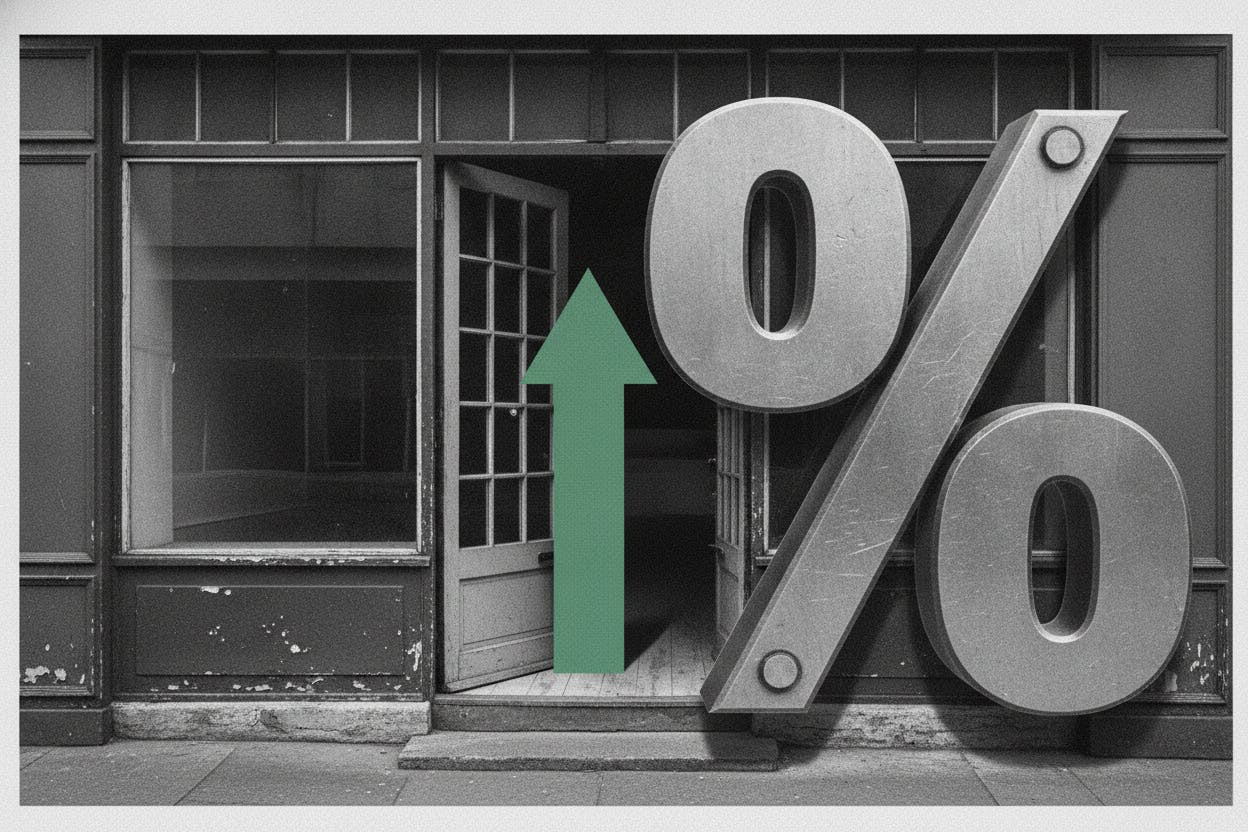
But the survey also revealed a persistent split between optimism and action. While owners feel better about the future, their ability to act on those plans is constrained by the cost of borrowing. The earnings trend—a measure of whether profits are rising or falling—remained deeply negative at a net minus 20%. That means far more owners report lower earnings than those reporting gains.
Credit conditions also remain tight. The net percentage of owners expecting easier credit conditions was just 5%, a sign that financing is still hard to come by or expensive. For small businesses that rely heavily on bank loans and credit cards to fund growth, high interest rates act as a brake on hiring and investment, even when sentiment improves.
This dynamic is a key reason why the optimism index can rise while actual payrolls and capital spending lag. As the Small Business Optimism Rises, but Inflation Pressures Intensify article notes, inflation has been a persistent headwind, and while fuel costs have eased, other input prices remain elevated.
What it means for investors
Small businesses are a major engine of job creation in the US economy, accounting for roughly half of all private-sector employment. Their hiring and spending decisions can ripple through local labor markets and influence broader economic trends. When small businesses pull back, it can slow job growth, reduce wage bargaining power for workers, and delay the easing of service-sector prices.
June's NFIB report suggests that while the mood is improving, the actual behavior of small business owners remains cautious. The split between upbeat expectations and weak profits is a warning sign that the recovery in the sector may be uneven. If interest rates stay high, the restraint on hiring and investment could persist, potentially cooling the labor market in small-business-heavy regions before the optimism narrative fades.
For everyday investors, this report is a reminder that sentiment data can be a leading indicator, but it is not the same as hard economic activity. The NFIB index is worth watching alongside other data points like jobless claims and consumer spending to gauge the health of the small business sector. The recent Small-Cap Stocks Surge: Russell 2000 Doubles S&P 500 Returns This Year shows that investors have been rotating into smaller companies, but that move may be premature if the underlying fundamentals remain weak.
In the near term, the focus will be on whether the Federal Reserve's next moves on interest rates provide relief. Lower rates could unlock the pent-up demand for hiring and investment that the survey hints at. Until then, small business owners are likely to remain in a wait-and-see mode, balancing brighter expectations against the reality of higher borrowing costs.
For more context on how small businesses are navigating the current environment, see our coverage of Small-Cap Stocks Surge as AI Hype Shifts to Infrastructure Suppliers and Bank Earnings Week: NII Guidance Takes Center Stage as Rates Stay Higher.