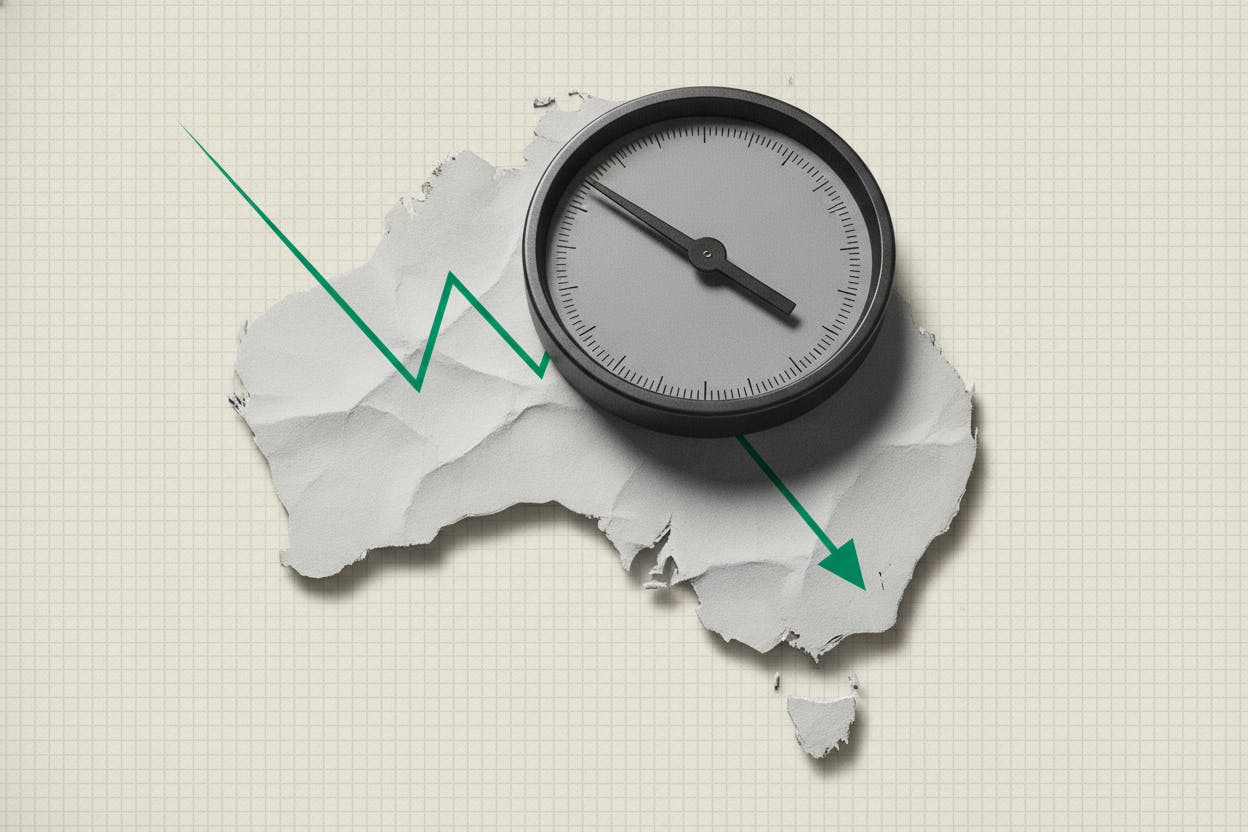
Australia's economy is showing clear signs of slowing, according to a closely watched barometer from one of the country's biggest banks. Westpac's Leading Index fell further into negative territory in June, and the lender now expects the Reserve Bank of Australia (RBA) to respond with a rate hike after the next inflation reading.
What the Leading Index Tells Us
The Westpac–Melbourne Institute Leading Index is designed to forecast the likely direction of economic activity over the next three to six months. A reading below zero signals that growth is running below its long-term trend. June's reading came in at -0.36% on a six-month annualized basis, down from -0.25% in May. That marks the sixth straight month of below-trend results, suggesting the factors that typically drive economic expansion—consumer spending, business hiring, and credit growth—are all softening.
Westpac attributed the downgrade to a combination of earlier fuel-price shocks and the delayed impact of the RBA's previous interest rate increases working their way through the economy. Higher borrowing costs tend to dampen demand over time, and the cumulative effect of past hikes appears to be catching up with households and businesses.
RBA Rate Hike Now on the Table
Perhaps the most notable takeaway from the report is Westpac's updated forecast for the RBA. The bank is now penciling in a 25-basis-point rate hike following the July 29 inflation print. That would lift the official cash rate from its current level, adding further pressure to borrowers and potentially cooling the economy even more.
The RBA has been walking a tightrope between controlling inflation and avoiding a sharp economic downturn. While inflation has moderated from its peak, it remains above the central bank's target range. The upcoming quarterly inflation data will be critical—if it comes in hotter than expected, a rate hike becomes more likely. If it shows further cooling, the RBA may hold steady.
This dynamic is playing out against a broader backdrop of global uncertainty. Rising Treasury yields have been pressuring financial and real estate stocks, as leading indicators slip in other major economies as well.
What It Means for Investors
For everyday investors, a slowing economy and the prospect of higher rates carry several implications. First, Australian stocks tied to domestic demand—such as retail, housing, and consumer discretionary sectors—could face headwinds if spending continues to weaken. On the other hand, exporters may benefit if the Australian dollar weakens as the economy softens, making their goods cheaper overseas.
Bond markets are already pricing in a higher probability of a rate hike, which has pushed up yields. That makes fixed-income investments more attractive relative to equities, particularly for income-focused investors. Real estate investment trusts (REITs) and high-dividend stocks could come under pressure if rates rise, as their yields become less competitive compared to safer government bonds.
The energy sector remains a wild card. Oil prices have been volatile, recently hitting a five-week high amid Middle East tensions, as Australian stocks set to rise on that news. Higher energy costs can feed into inflation, complicating the RBA's decision.
Investors should also keep an eye on the labor market. The AI reshapes Australian jobs story highlights how structural changes are already affecting employment growth in certain sectors, adding another layer of uncertainty to the economic outlook.
Looking Ahead
The next major data point is the July 29 inflation print, which will likely determine the RBA's course. If inflation remains sticky, a rate hike could be announced at the central bank's August meeting. That would be the first hike in several months and would signal that the fight against inflation is not yet over.
Westpac's Leading Index is just one indicator, but its consistent below-trend readings suggest that the Australian economy is losing momentum. For investors, the key takeaway is to prepare for a potentially more challenging environment—one where growth is slower, rates may rise, and market volatility could persist.