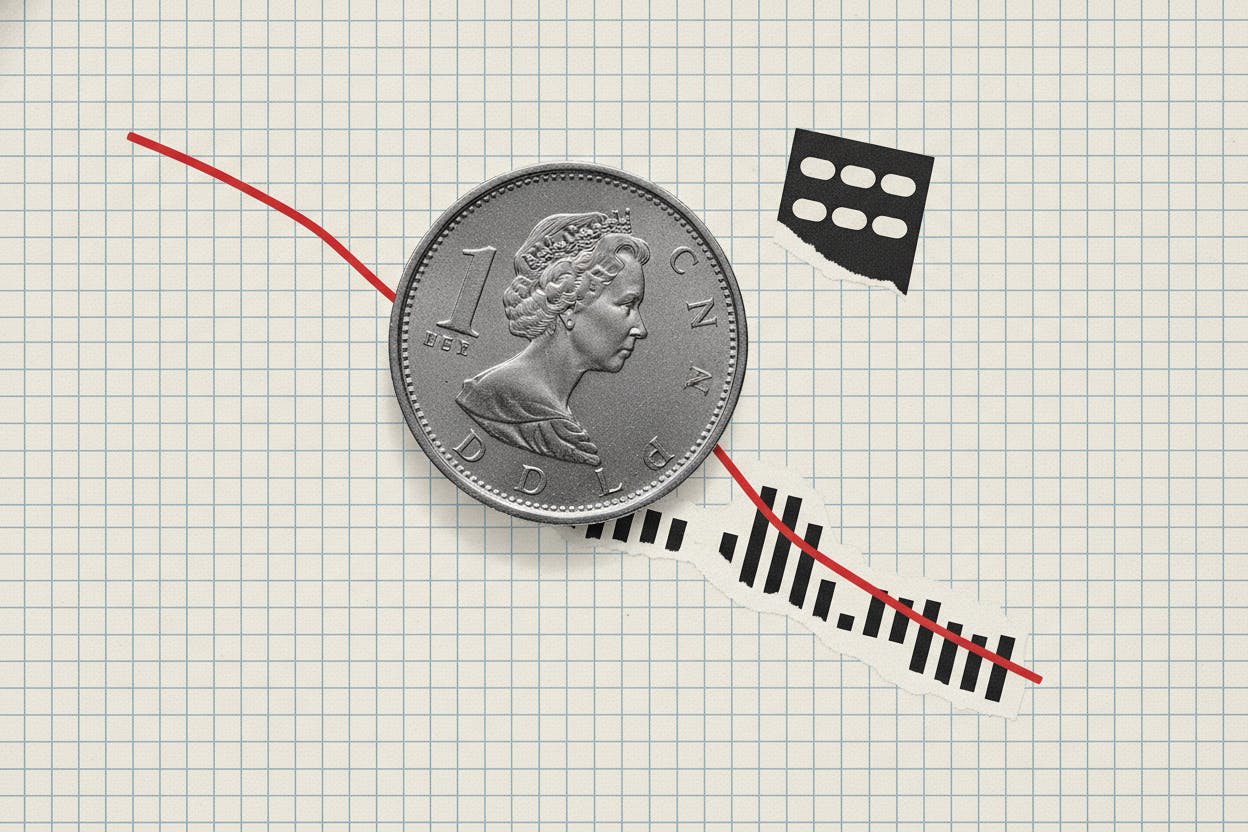
Canada's dollar, known as the loonie, slipped against its US counterpart on Tuesday after a cooler-than-expected inflation report reduced the likelihood of further interest rate hikes from the Bank of Canada (BoC) this year.
The loonie fell 0.3% to 1.4060 per US dollar, as traders adjusted their expectations following data showing Canada's annual inflation rate slowed to 2.8% in June, down from 3.2% in May. The decline was largely driven by lower gasoline prices, though underlying measures of inflation that the BoC closely monitors also eased.
What the inflation data shows
June's inflation reading marks a notable cooldown from the previous month and came in below many economists' forecasts. The headline figure of 2.8% is the lowest since March and brings inflation closer to the BoC's target range of 1% to 3%, though it remains above the central bank's 2% midpoint.
Core inflation measures, which strip out volatile items like food and energy, also softened. This is significant because the BoC has emphasized that it needs to see sustained progress on underlying price pressures before it can feel confident that inflation is on a sustainable downward path.
Marc Chandler, chief market strategist at Bannockburn Global Forex, noted that the report was softer than expected beyond just the headline number, leaving markets leaning toward a more dovish outlook for the BoC.
Market reaction: Rate hike bets fade
Following the data release, market pricing for a BoC rate hike by December dropped to 66%, down from higher levels before the report. That means traders now see about a two-in-three chance that the central bank will raise its key policy rate again before year-end, down from a near-certainty just weeks ago.
Currencies are highly sensitive to interest rate expectations. When traders think a central bank is less likely to raise rates, the currency often weakens because lower rates make holding that currency less attractive to yield-seeking investors. That dynamic played out Tuesday as the loonie gave up ground.
The move in the loonie also reflects broader trends in currency markets, where the US dollar has been strengthening on expectations that the Federal Reserve may keep rates higher for longer. For context, the Treasury Yields Slide as Softer Inflation Data Dims Fed Rate Hike Prospects story highlights how similar dynamics are playing out south of the border.
What it means for investors
For everyday Canadian investors, a weaker loonie has mixed implications. On the one hand, it makes imported goods more expensive, which can feed into inflation over time. On the other hand, it benefits Canadian exporters, particularly those in the energy and materials sectors, whose products become cheaper for foreign buyers.
The cooling inflation data is broadly positive for Canadian stocks, as it reduces the pressure on the BoC to keep raising rates aggressively. Higher interest rates tend to weigh on stock valuations by increasing borrowing costs for companies and reducing consumer spending. The TSX Dips 0.2% as Bank Stocks Fall, Tech Holds Steady Amid Cooler Inflation report shows how the market initially reacted to the news.
However, investors should note that inflation remains above the BoC's target, and the central bank has signaled it is prepared to raise rates further if needed. The path of inflation will be closely watched in the months ahead, especially with potential headwinds from rising oil prices due to geopolitical tensions. The Canada's Inflation Eases to 2.8% in June as Gas Prices Drop, Core Pressures Persist article provides more detail on the underlying trends.
For bond investors, the softer inflation data could lead to lower bond yields, as the expectation of fewer rate hikes reduces the premium investors demand for holding longer-term debt. That would be a positive for bond prices, which move inversely to yields.
Looking ahead
The BoC's next policy decision is scheduled for September 6, and the inflation data will be a key input. If the trend of cooling inflation continues, the central bank may hold rates steady, providing some relief to borrowers who have faced rapidly rising mortgage and loan costs.
But risks remain. The Canada's June Inflation Slows to 2.8% as Gas Prices Drop, but Middle East Tensions Loom piece highlights how geopolitical factors could push energy prices higher, potentially reigniting inflation. Investors should keep an eye on oil markets and global economic developments that could affect Canada's inflation outlook.
For now, the message from the data is clear: inflation is heading in the right direction, but the journey back to the BoC's 2% target is not yet complete. The loonie's slide reflects that uncertainty, and markets will be watching for any hints from the central bank about its next move.