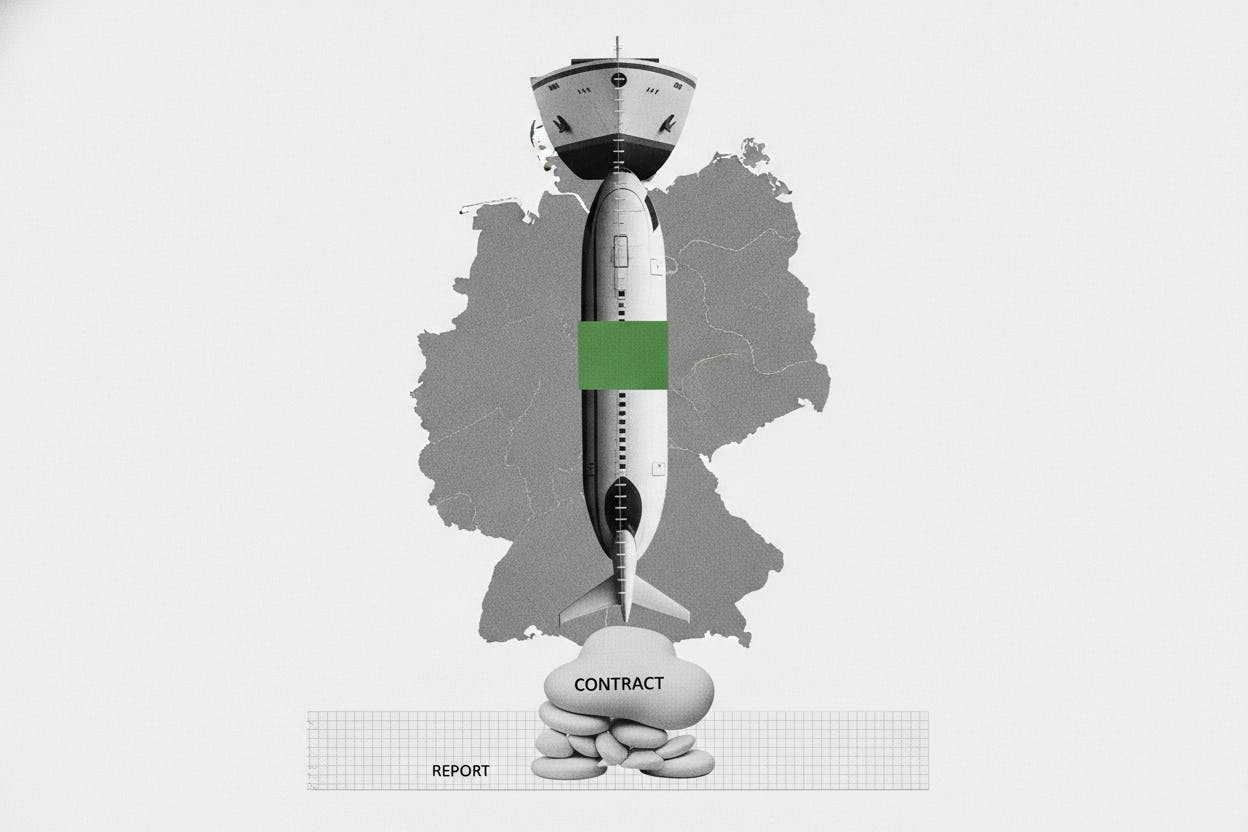
Germany's factory orders posted a solid headline gain in July, but the numbers tell a more cautious story once you strip out a handful of blockbuster transport deals. The Federal Statistical Office (Destatis) reported Friday that orders rose 2.5% month on month, following a revised 3.7% increase in June. However, the surge was almost entirely due to a 126.4% jump in transport equipment orders—think ships, trains, and aircraft—while orders for autos, a key German export, fell 12.5%.
Mega orders mask underlying weakness
Economists often warn that large, one-off contracts can distort monthly factory order data. That's exactly what happened in July. The transport sector's massive gain, driven by what Destatis calls "mega orders," lifted the overall figure. But when those exceptional contracts are excluded, total demand actually declined by 1.4% on the month. Over the May-to-July period, orders excluding the mega deals fell 2.2%, pointing to a more persistent softness in the industrial sector.
The divergence between the headline and the underlying trend is a reminder that monthly economic data can be noisy. For investors, it's important to look beyond the top-line number to understand what's really happening in the economy.
What's behind the weakness?
The drop in auto orders is particularly notable. Germany's car industry has been grappling with a range of challenges, including high energy costs, a slow transition to electric vehicles, and weaker global demand. The 12.5% decline in July suggests that these pressures are far from over.
Broader industrial weakness is also consistent with recent surveys. Germany's services sector has been in contraction territory, and the manufacturing sector has been struggling for months. While some forecasters have recently lifted their growth expectations for Germany, partly due to increased government spending, the factory order data suggests that the industrial recovery is still fragile.
As we've noted before, Germany's services sector remains in contraction, and the latest factory orders reinforce the picture of an economy that is not yet firing on all cylinders.
What it means for investors
For everyday investors, the key takeaway is that Germany's economy—the largest in Europe—is still struggling to find solid footing. The headline jump in factory orders might look like good news, but the underlying trend is weaker. This matters because Germany is a major trading partner for many countries, and its economic health can influence global markets.
Investors with exposure to European stocks, particularly in the industrial and automotive sectors, should be aware that the recovery may be uneven. Companies that rely on large, infrequent orders (like shipbuilders or train manufacturers) can see volatile earnings, while those tied to consumer demand or autos may continue to face headwinds.
That said, the data isn't all bad. The fact that mega orders are still coming in suggests that some large-scale projects are moving forward, which could provide a buffer for certain companies. And with the European Central Bank closely watching inflation and growth, any sustained weakness could influence future interest rate decisions.
For a broader perspective on how Germany's outlook is evolving, recent forecasts have been slightly more optimistic, but the factory order data highlights the risks that remain.
Looking ahead
Investors will be watching the coming months to see whether the weakness in core factory orders persists. If the trend continues, it could weigh on Germany's GDP growth and corporate earnings. On the other hand, if mega orders continue to appear, they could keep the headline numbers looking healthier than the underlying reality.
For now, the message from July's data is clear: Germany's industrial sector is not out of the woods yet. The jump in factory orders was a statistical fluke driven by a few large deals, not a sign of broad-based strength. As always, it pays to dig beneath the surface.