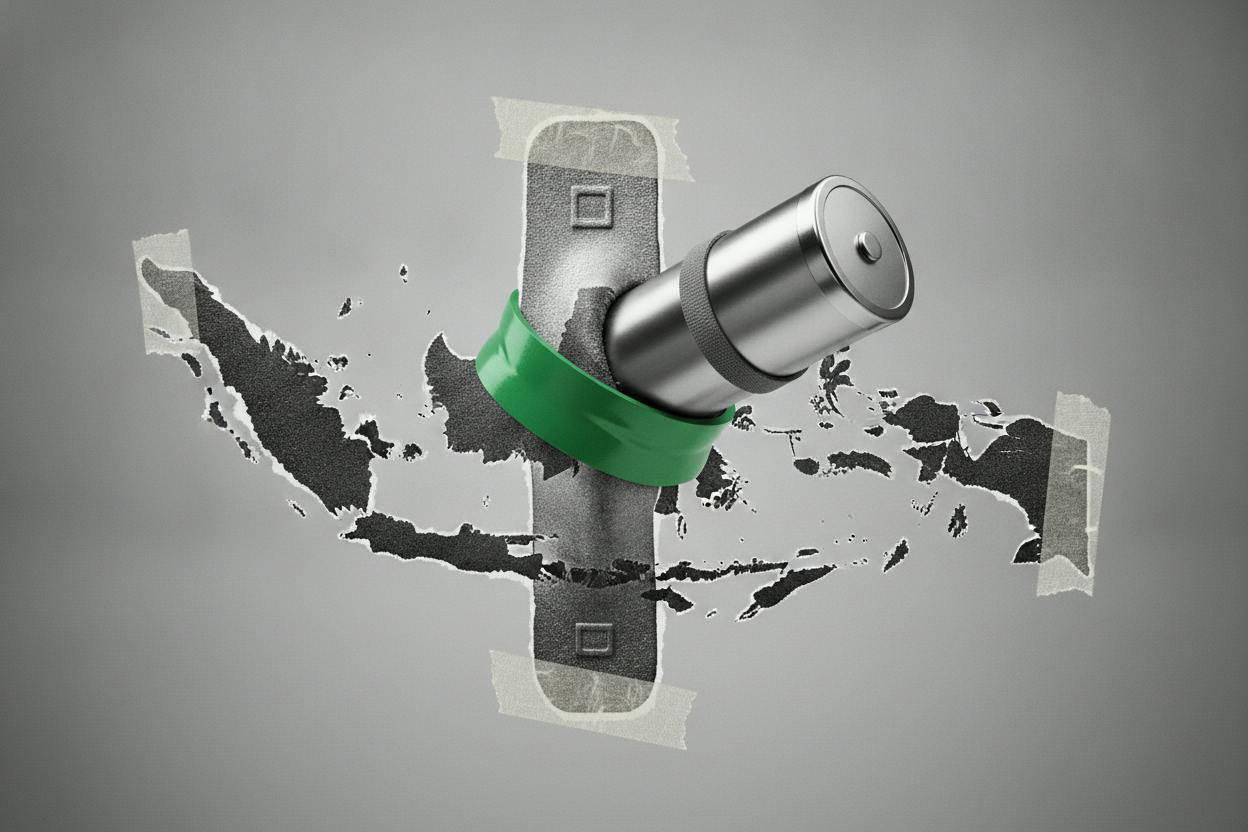
Indonesia’s President Prabowo Subianto used a high-profile event at the Weda Bay industrial park to send a clear message to global investors: your money is still welcome here. The occasion was the launch of new nickel projects and the country’s first exports of electric vehicle (EV) batteries—a milestone in its push to move up the value chain.
The reassurance comes at a delicate moment. Indonesia has been tightening rules for miners and smelters, raising costs and stirring uncertainty among foreign companies that have poured billions into the country’s nickel industry. Many of those investors are Chinese firms, which have dominated the processing sector.
Why nickel matters
Nickel is a key ingredient in stainless steel and, increasingly, in the lithium-ion batteries that power electric vehicles. Indonesia sits on some of the world’s largest nickel reserves, giving it outsized influence over global supply. For years, the government has pursued a strategy of pairing its abundant deposits with policies that force companies to process the ore domestically rather than ship it raw.
The most notable of those policies was a 2020 ban on raw nickel exports. That move was designed to attract investment in smelting and refining—and it worked. Foreign money, much of it from China, flooded into Indonesian nickel processing, turning the country into a global powerhouse. But the strategy has also drawn criticism, including from the World Trade Organization, and has raised questions about environmental and labor standards.
Now, with new rules adding costs for miners and smelters, some investors are getting nervous. The president’s pledge to safeguard foreign investment appears aimed at calming those fears and signaling that Indonesia remains open for business.
What the new rules mean
The tighter regulations are part of Indonesia’s broader effort to extract more value from its natural resources and to address concerns about environmental damage and local benefits. For companies already operating in the country, the changes could squeeze profit margins and complicate long-term planning.
For investors, the key question is whether Indonesia can balance its desire for greater control and higher revenues with the need to keep foreign capital flowing. The country’s nickel industry is capital-intensive, and many projects rely on foreign expertise and financing. If rules become too burdensome, some companies could scale back or look elsewhere.
At the same time, the launch of EV battery exports marks a significant step forward. It shows that Indonesia is not just a supplier of raw materials but is moving into higher-value manufacturing. That could make the country more attractive to investors who want exposure to the EV supply chain.
What it means for investors
For everyday investors, the developments in Indonesia are a reminder of how geopolitical and policy shifts can affect commodity markets. Nickel prices have been volatile in recent years, influenced by supply disruptions, demand from the EV sector, and policy changes in major producing countries.
Investors with exposure to nickel miners, battery makers, or EV companies should watch how Indonesia’s rules evolve. Tighter regulations could raise costs for producers, potentially affecting earnings. On the other hand, a stable and welcoming investment climate could support continued growth in the country’s nickel output, which helps keep global supplies ample.
The broader context also matters. Indonesia is not the only country trying to secure a bigger slice of the critical minerals pie. Similar dynamics are playing out in other resource-rich nations, from Chile to the Democratic Republic of Congo. As copper supplies tighten and tin prices stay elevated on AI and EV demand, the race for critical minerals is intensifying.
For now, Indonesia’s message is one of continuity: it wants foreign investment, but on its own terms. Investors will be watching to see whether the new rules are a one-off adjustment or the start of a more protectionist trend. Either way, the outcome will ripple through the global nickel market and the companies that depend on it.