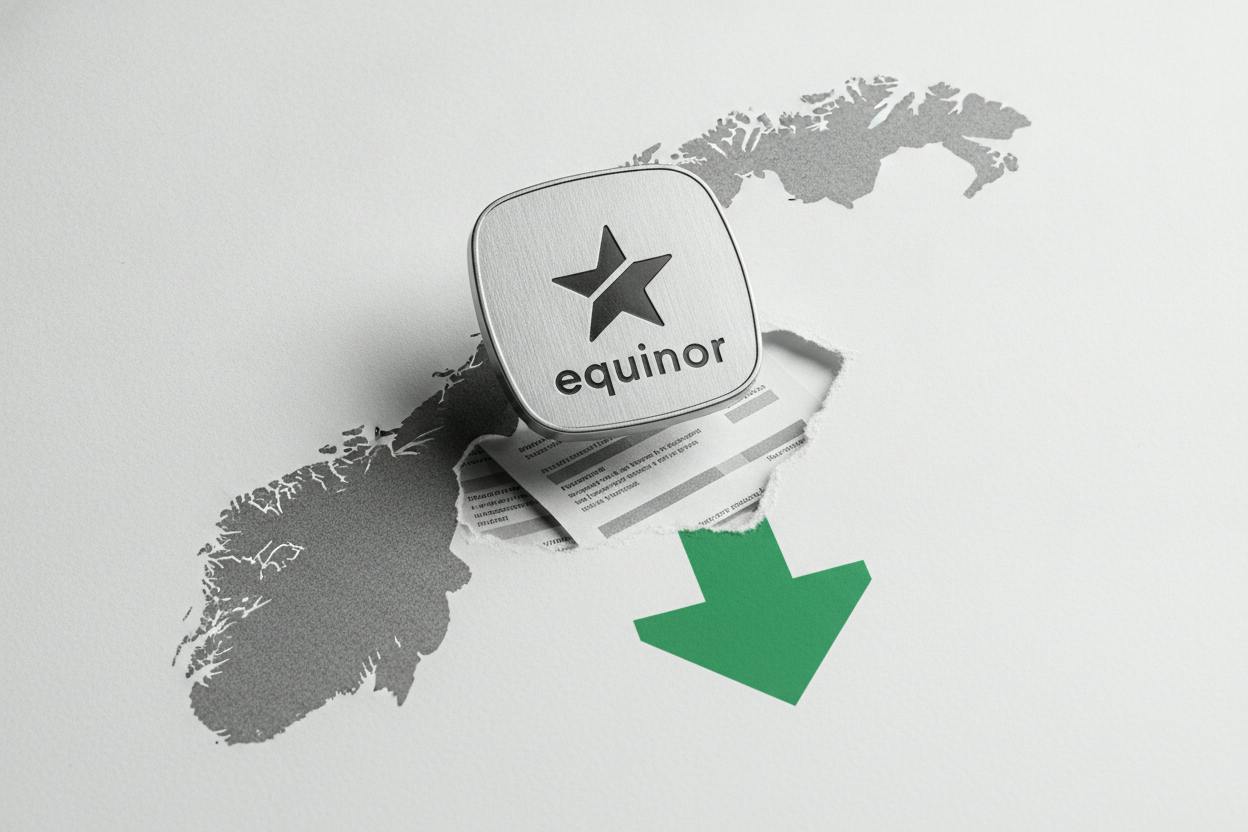
RBC Capital Markets has trimmed its third-quarter earnings expectations for Equinor, the Norwegian state-backed energy giant, after the company's latest trading update revealed softer upstream production and a phenomenon known as "underlift." The bank now sees quarterly net income of $3.2 billion, down from its previous estimate, ahead of Equinor's scheduled earnings release on October 28.
What the trading update revealed
Equinor's update suggested that the company produced and sold less oil and gas during the quarter than RBC had originally modeled. That shortfall came despite Norwegian oil and gas prices being more favorable than the bank had assumed, which would normally boost revenue. The disconnect highlights that operational issues, not market conditions, were the primary drag on volumes.
The biggest contributors to the lower output were operational: extra shutdown days at the Johan Castberg field in the Barents Sea, combined with natural production declines at mature fields. Equinor also flagged "underlift," a term that describes when a producer takes fewer barrels than its ownership share allows, often due to logistics, scheduling, or transportation constraints. The company quantified the combined impact at 20,000 barrels of oil equivalent per day.
Underlift is a common but often misunderstood concept in the oil and gas industry. It doesn't mean the oil is lost—it simply means the company deferred lifting its share of production, which can shift revenue between quarters. For investors, it can create noise in quarterly results, making it harder to compare performance year over year.
Why this matters for Equinor and its investors
Equinor is one of Europe's largest energy producers and a major supplier of natural gas to the continent. Its results are closely watched not only for the company's own financial health but also as a barometer for the broader European energy market, especially as the region continues to navigate supply concerns and the transition to cleaner energy.
For everyday investors, the key takeaway is that even well-run energy companies can face quarter-to-quarter volatility driven by operational hiccups. RBC's forecast cut is a reminder that analyst estimates are just that—estimates—and actual results can diverge due to factors like maintenance schedules or logistics bottlenecks.
The bank's move also echoes a broader theme in the energy sector: while commodity prices remain a dominant driver of earnings, operational efficiency is just as important. Companies that can keep production steady and costs under control are better positioned to capitalize on favorable price environments. This is similar to how RBC recently trimmed forecasts for Repsol due to weak refining margins, showing that analysts are closely scrutinizing operational metrics across the sector.
What to watch ahead of the October 28 earnings
Investors will be looking for more details when Equinor reports its full third-quarter results later this month. Key questions include whether the underlift will be reversed in the fourth quarter, how much of the production shortfall was due to one-off events versus longer-term declines, and what management says about the outlook for the rest of the year.
Equinor's update also comes at a time when energy markets are relatively stable, but geopolitical risks and OPEC+ decisions can quickly change the picture. The company's gas business, in particular, remains a focus as Europe works to secure reliable supplies.
For those holding Equinor shares or considering an investment, it's worth remembering that energy stocks are cyclical and can be volatile. A single quarter's miss doesn't necessarily change the long-term story, but it does underscore the importance of diversification. As always, it's wise to look at a company's full-year performance and broader market conditions rather than reacting to one analyst's forecast change.
RBC's cut is a modest adjustment, not a dramatic downgrade, and the bank's view on Equinor's longer-term prospects appears unchanged. The real test will come when the company delivers its actual numbers and provides guidance for the final quarter of the year.
This article is for informational purposes only and does not constitute investment advice. Always do your own research before making investment decisions.