Peru's central bank has left its benchmark interest rate unchanged at 4.25% for the tenth consecutive meeting, extending a pause that began last September. Policymakers are holding steady as they weigh the impact of higher oil prices and weather-related disruptions on inflation, which is expected to run above the bank's target range this year.
The decision keeps borrowing costs at their current level after a series of earlier rate cuts. The bank noted that uncertainty tied to geopolitics has eased somewhat since June, helped by calmer conditions in the Middle East and a more normal flow of hydrocarbon supplies that has taken some pressure off global oil prices.
Inflation Outlook Remains Elevated
Central bank chief Julio Velarde expects inflation to run at 3.8% this year, above the bank's 1%–3% target range. Higher fuel costs and the El Niño weather pattern are already affecting key sectors like fishing and agriculture, pushing up prices for food and other goods.
The bank's view is that these pressures will fade over time, with inflation drifting back to 2.0% by 2027. But in the near term, the path remains choppy. The combination of global energy price swings and local weather shocks means inflation could stay above target for months, keeping the central bank in a wait-and-see mode.
For context, central banks around the world have faced similar dilemmas. In Mexico, inflation dropped to 3.37% in June, easing pressure on Banxico to cut rates, as reported in Mexico Inflation Drops to 3.37% in June, Easing Pressure on Banxico to Cut Rates. Meanwhile, Egypt's central bank held rates as inflation signals diverged, a story covered in Egypt's Central Bank Holds Rates as Inflation Signals Diverge.
Political Continuity Offers Stability
With President-elect Keiko Fujimori set to take office on July 28th, investors have received some reassurance that Velarde will remain in his role. That continuity can help anchor inflation expectations and reduce the extra return investors demand for political uncertainty.
In practice, a steady policy signal can soften market swings even when inflation data remains noisy. The central bank's commitment to its inflation target, combined with a familiar face at the helm, may help keep the Peruvian sol and local-currency bonds more stable than they would be otherwise.
What It Means for Investors
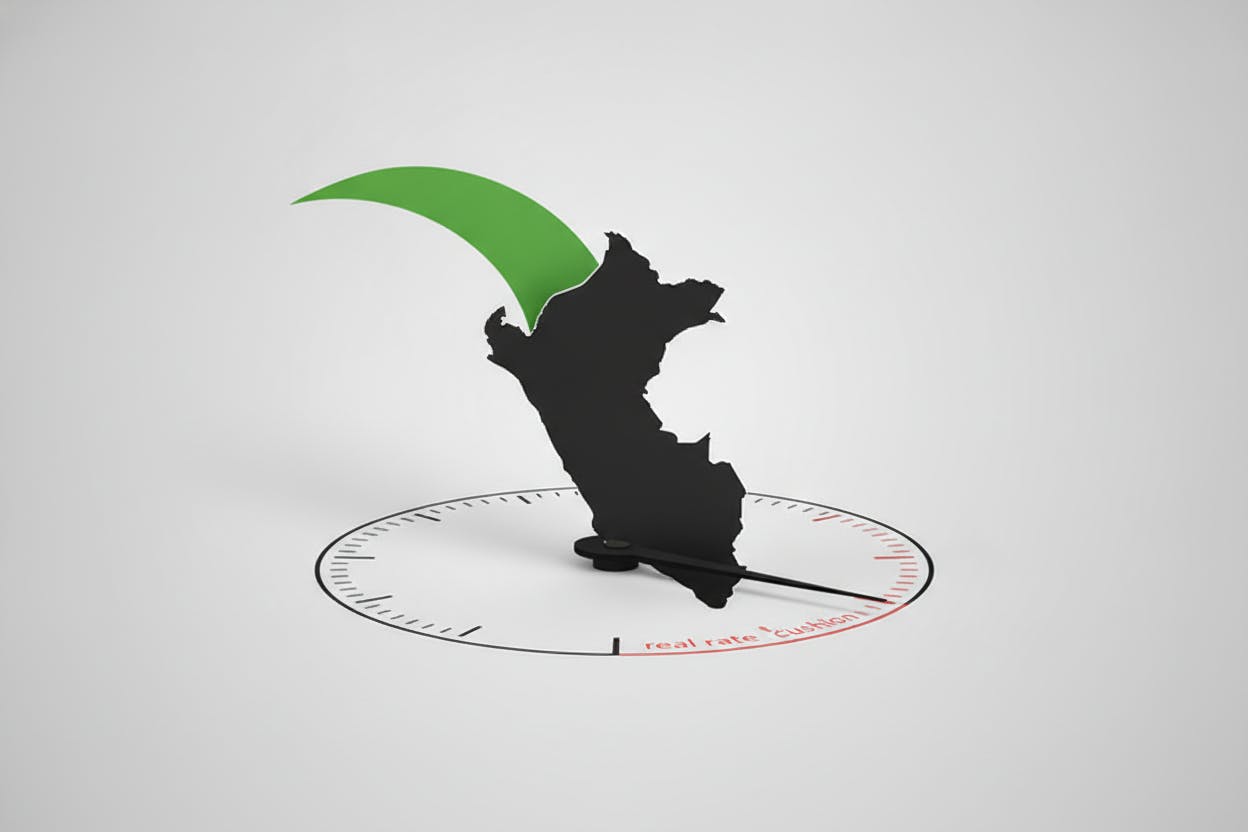
Peru's 4.25% rate looks less restrictive when compared with a 3.8% inflation forecast. The "real" interest rate — the policy rate minus inflation — is thin, leaving local-currency bonds and the sol more sensitive to upside inflation surprises. If oil or weather-driven food costs don't cool as expected, the thin cushion could lead to greater volatility.
However, the political continuity provided by Velarde's continued tenure can help offset some of that risk. A steady policy framework can lower the premium investors demand for uncertainty, which in turn can support bond prices and the currency.
Investors will be watching upcoming inflation data closely, as well as any signs that El Niño's effects on agriculture and fishing are easing. The central bank's next moves will depend on whether those pressures fade as expected, or whether they persist and force policymakers to reconsider their stance.
For a broader perspective on how central banks are navigating similar challenges, see Asia Stocks Steady as Korea Chip Rally Returns; Malaysia Holds Rates and Taiwan Central Bank Warns AI Boom's Debt-Fueled Expansion Risks Bubble.