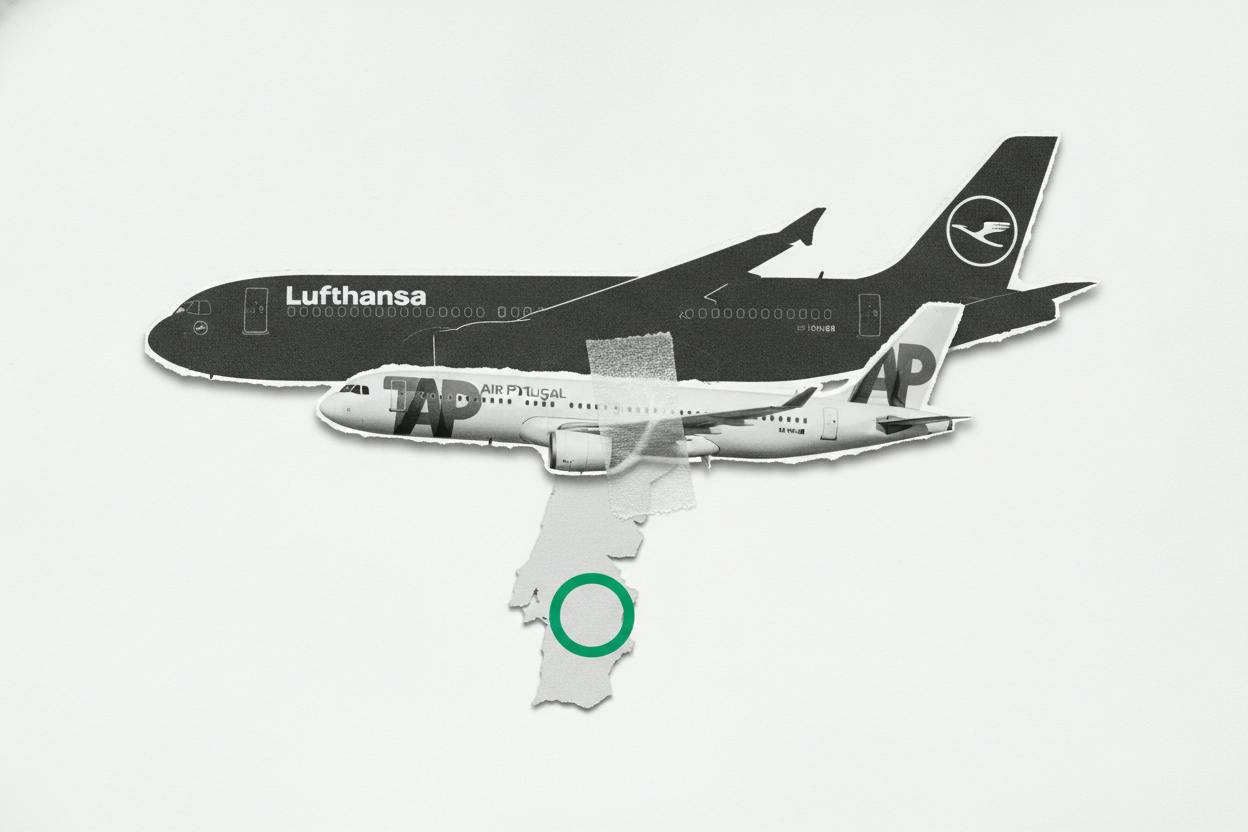
Portugal's government has selected Lufthansa, one of Europe's largest airline groups, to acquire a 44.9% stake in TAP Air Portugal and serve as its strategic partner, according to Reuters. The decision marks a significant step in a privatization process that has dragged on for years, and it could have ripple effects across the European airline industry.
TAP is an attractive prize. It controls valuable takeoff and landing slots at Lisbon's airport, a key gateway between Europe and South America. The airline operates a fleet of 101 aircraft and flies to 93 destinations, with strong connections to Brazil, Portuguese-speaking Africa, and the United States. For Lufthansa, adding TAP would deepen its network and strengthen its position in the transatlantic and Latin American markets.
Why this deal matters for European aviation
The choice of Lufthansa is not just about one airline. Reuters noted that European airline consolidation has been picking up as governments and executives seek ways to make national carriers more resilient. Many flag carriers are relatively small compared to the global giants, and they face intense competition from low-cost carriers and Middle Eastern rivals.
By teaming up with Lufthansa, TAP would gain access to a larger group's resources. That could mean cheaper borrowing, better deals on aircraft leases, and centralized purchasing for fuel, spare parts, and maintenance. Over time, these efficiencies lower the cost per seat, which is crucial in an industry where profit margins are notoriously thin.
For Lufthansa, the logic is scale. A bigger group can spread fixed costs across more flights and passengers, and it can negotiate from a position of strength with suppliers. This is especially important when input costs are volatile—jet fuel prices can swing sharply, and smaller carriers often feel those swings first because they have less ability to hedge or absorb shocks.
What happens next
Portugal has tried for years to privatize TAP, and this decision moves the process into a harder phase. The two sides now need to agree on an industrial plan, governance structure, and which routes and hubs will be protected. The government has said it wants to maintain TAP's role as a connector for Portugal, including links to Porto, Faro, the Azores, and Madeira, not just Lisbon.
There are also political sensitivities. TAP is a national symbol, and any deal that could lead to job losses or reduced service to smaller airports will face scrutiny. The government will likely seek guarantees on employment and regional connectivity as part of the final agreement.
For investors, the key question is how quickly TAP can start behaving like part of a bigger machine. If Lufthansa integrates financing, procurement, and fleet planning, TAP could lock in cheaper funding and squeeze costs through group-wide buying power. That tends to produce steadier cash flow when fuel prices jump and demand softens.
What it means for investors
This deal is a clear sign that European airlines are consolidating to survive and compete. For shareholders of Lufthansa, the acquisition of a minority stake in TAP is a strategic bet that could pay off if the integration goes smoothly. But it also carries risks: integrating a new airline is complex, and cultural clashes or operational hiccups can erode the expected benefits.
For TAP's future, the partnership could provide the financial stability it needs to expand its Lisbon-heavy network without being as exposed to sudden cost shocks. That could be good news for travelers and for the Portuguese economy, which relies heavily on tourism and air connectivity.
However, the deal is not done yet. The two sides must finalize the terms, and regulators may have their say. European competition authorities could impose conditions to protect consumers, especially on routes where Lufthansa and TAP would have significant market power.
For everyday investors, this story is a reminder that airline stocks are often volatile and sensitive to fuel prices, economic cycles, and geopolitical events. Consolidation can create stronger players, but it also brings integration risks. As always, it's wise to look at the broader picture—how a company fits into the industry's long-term trends—rather than reacting to a single headline.
Related coverage: Lufthansa's likely TAP stake and the bidding process.