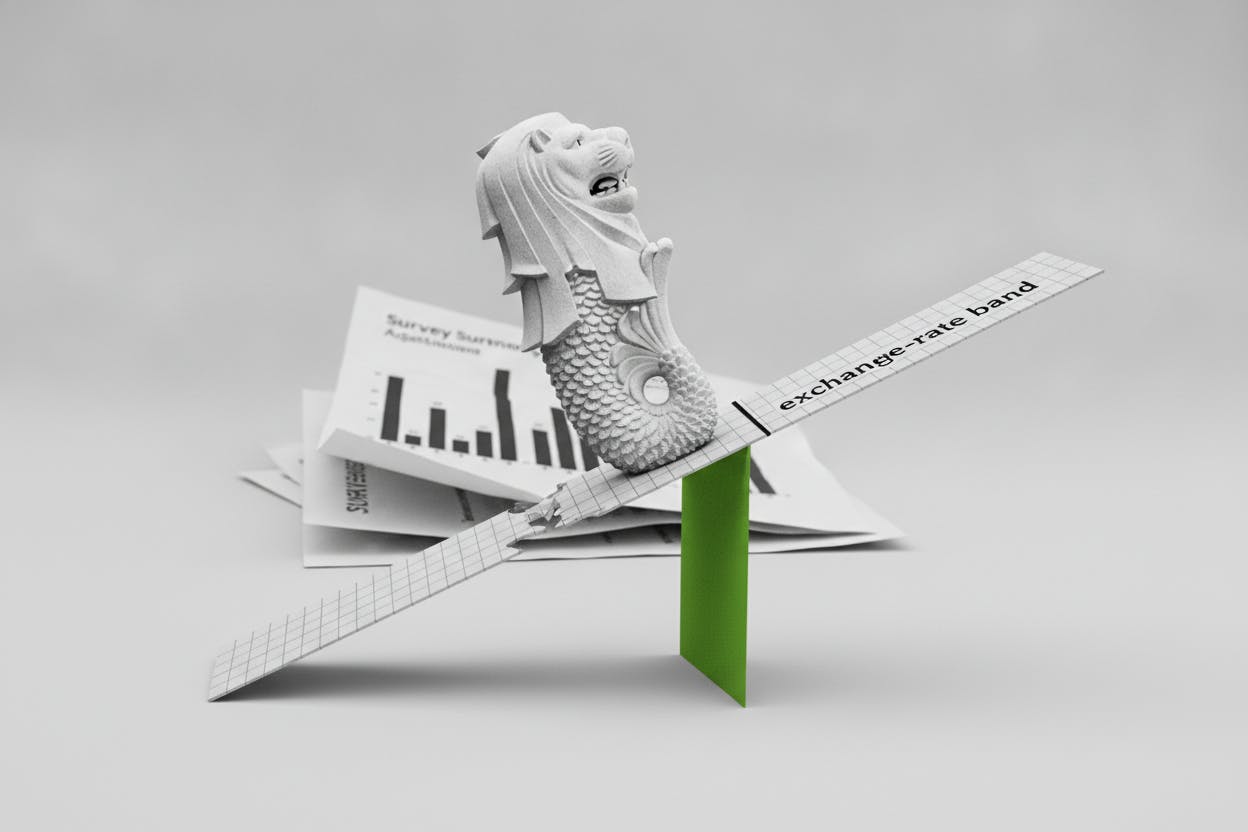
Economists are turning more optimistic about Singapore's economy, according to a quarterly survey by the Monetary Authority of Singapore (MAS). The survey, conducted in August and answered by 25 analysts, shows forecasters now expect stronger growth this year and next, while also trimming their inflation projections.
The median forecast for 2026 growth rose to 5% from 3.5% in the June survey, after the economy expanded 5.9% in the second quarter. Forecasters also lifted their 2027 growth view to 3.1% from 2.5%. At the same time, they trimmed their 2026 inflation forecast, suggesting price pressures are expected to ease.
What's behind the brighter outlook?
The upgrade reflects a stronger-than-expected second quarter, which has given economists more confidence in the economy's momentum. Singapore's trade-dependent economy has benefited from resilient global demand, particularly in electronics and other key export sectors.
However, the survey also highlights the risks that could derail the recovery. The Middle East conflict was cited as the top risk, reflecting concerns about potential disruptions to global supply chains and energy prices. An AI bubble was the second-biggest worry, as investors and policymakers debate whether the rapid run-up in artificial intelligence-related stocks and spending is sustainable.
These concerns are not unique to Singapore. Central banks and market watchers around the world are grappling with similar questions about geopolitical tensions and the durability of the AI-driven tech rally. For a small, open economy like Singapore, external shocks can have an outsized impact.
What it means for investors
For everyday investors, the survey offers a mixed picture. On one hand, stronger growth is generally positive for corporate earnings and the stock market. On the other, cooler inflation could mean less pressure on the central bank to tighten policy, which can support bond prices and keep borrowing costs lower.
But the flagged risks are a reminder that the path ahead is not without obstacles. Geopolitical flare-ups can quickly change the outlook, and a sharp correction in AI-related assets could ripple through global markets, including Singapore's. Investors who are heavily exposed to tech or energy sectors may want to consider how these risks could affect their portfolios.
The survey also comes amid a broader regional picture. Nearby economies are showing mixed signals, with some seeing cooling inflation and others facing policy dilemmas. For instance, South Korea's inflation has cooled beneath the surface, while Australia's growth has picked up but households remain cautious. These trends can influence trade and investment flows in the region.
For those watching central bank policy, the survey's inflation outlook is a key signal. If inflation continues to ease, the MAS may have more room to keep its policy settings accommodative, which could support economic activity. However, the central bank has been cautious, and any unexpected price pressures could change the calculus.
Investors should also keep an eye on global developments. The mixed US data and Fed officials' warnings about sticky inflation are reminders that the global interest rate environment remains uncertain. For Singapore, which does not have an independent monetary policy but uses the exchange rate as its tool, global rate moves can influence capital flows and the value of the Singapore dollar.
Overall, the survey points to a more constructive outlook for Singapore's economy, but with clear caveats. Investors would be wise to stay diversified and keep an eye on the risks that economists have flagged.