Australia's economy showed modest improvement in the June quarter, but the gains were not evenly shared. Westpac, one of the country's largest banks, reported that its business performance and cashflow gauges ticked higher — but only because big companies pulled ahead while smaller firms struggled.
Westpac's Business Performance Gauge, which compares operating revenues with operating expenses, rose 0.2% over the quarter. Its Cashflow Gauge, which also accounts for liabilities, climbed 0.3%. Both measures were still roughly 1% higher than a year earlier. However, the headline numbers mask a sharp divergence beneath the surface.
Big business leads, small business lags
The split is stark. Westpac said revenue growth was strongest in business-to-business and government-linked work, where large companies tend to have scale, bidding teams, and long contracts. These firms are better positioned to navigate rising costs and pass them on to customers.
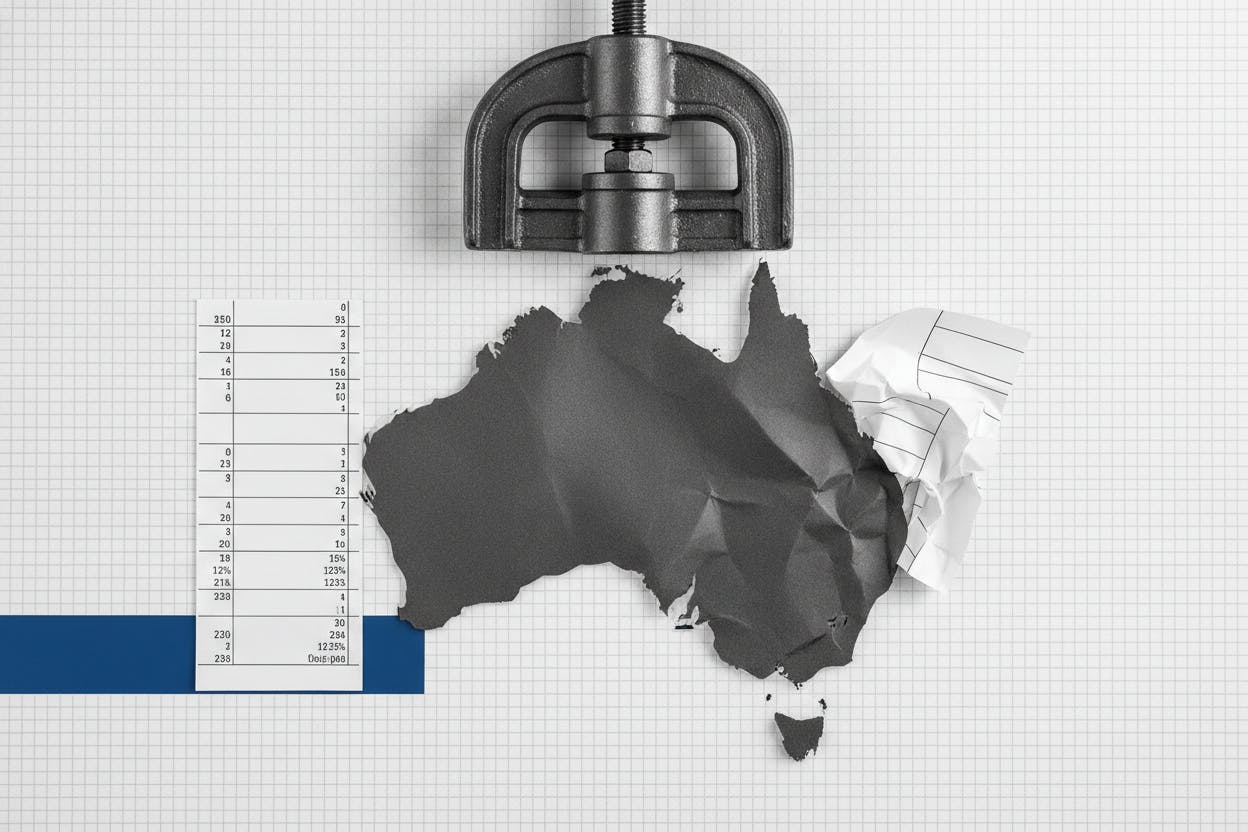
In contrast, small and medium enterprises (SMEs) saw their performance gauge slide 1.3% during the quarter. The bank attributed the decline to climbing fuel costs and higher debt-servicing expenses, which squeeze margins more acutely for smaller operators with less pricing power.
This pattern is consistent with what economists call a "K-shaped" recovery, where larger, well-capitalised firms thrive while smaller players fall behind. For everyday investors, it highlights the importance of looking beyond aggregate economic data to understand which parts of the market are actually benefiting.
What it means for investors
For investors with exposure to Australian equities, the Westpac data suggests that large-cap companies — particularly those with government contracts or strong business-to-business relationships — may be better insulated from the current cost pressures. Smaller companies, especially in sectors like retail, hospitality, and services that rely on consumer spending, could face continued headwinds.
The report also ties into broader concerns about the Australian economy. The Reserve Bank of Australia (RBA) has been keeping a close watch on inflation and employment data, with Australia's hot jobs data keeping the RBA on rate hike watch as oil prices rise. Higher fuel costs feed directly into operating expenses for many businesses, and if the RBA raises rates further, debt-servicing costs will only increase for SMEs and households alike.
Investors should also note the global context. Rising oil prices have been a theme across markets, with the loonie edging up on an oil rally and oil prices edging higher on supply fears. For Australian companies, higher energy costs are a direct input cost, and those without the ability to hedge or pass on costs will feel the pinch.
Cashflow pressures mount
The Cashflow Gauge's modest 0.3% rise is notable because it came despite higher interest payments. Westpac's measure accounts for liabilities, meaning it captures the impact of rising debt costs. That the gauge still managed a small gain suggests that revenue growth for large firms was enough to offset higher financing expenses — but only just.
For SMEs, the picture is more concerning. A 1.3% drop in their performance gauge, combined with rising fuel and debt costs, points to a squeeze that could lead to reduced hiring, lower capital spending, or even business closures. This has knock-on effects for employment and consumer spending, which are key drivers of the broader economy.
Investors should watch upcoming earnings reports from Australian companies, particularly those in the small-cap space, for signs of margin compression. The divergence between large and small firms may also influence sector rotation strategies, with investors potentially favouring large-cap industrials and infrastructure plays over smaller consumer-facing businesses.
The bottom line
Westpac's June quarter data paints a picture of an economy that is growing, but unevenly. Big companies with scale and government contracts are driving the gains, while smaller firms are being squeezed by rising costs. For investors, this means paying close attention to which companies are actually benefiting from the economic backdrop — and which are merely surviving.
As the RBA weighs its next move on interest rates, and as oil prices remain elevated, the gap between large and small businesses could widen further. Understanding these dynamics is key to making informed investment decisions in the current environment.