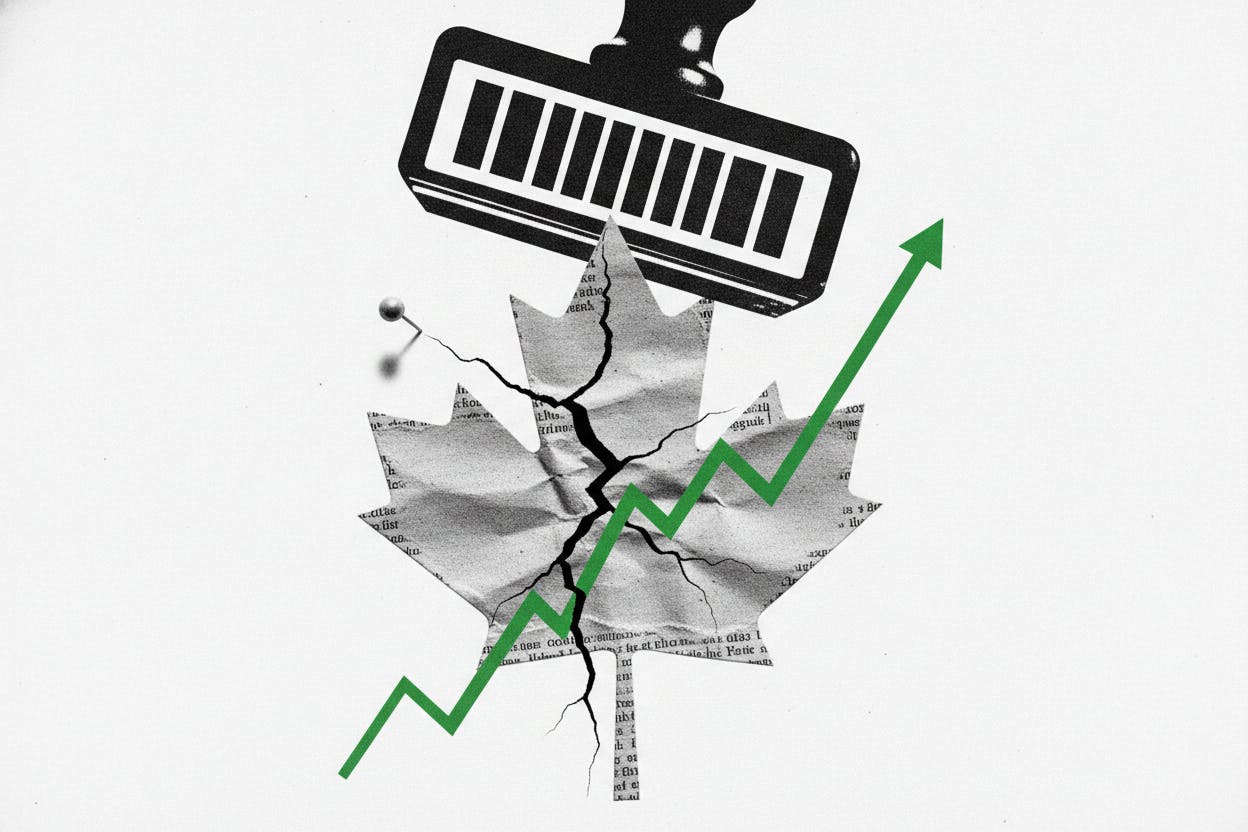
BMO has issued a stark warning about the potential economic fallout from a proposed 50% US tariff on Canadian goods, saying it could shave half a percentage point off Canada's gross domestic product and complicate the Bank of Canada's next interest rate decision.
The threat, which targets a wide range of Canadian exports, comes as trade tensions between the two countries escalate. If implemented, the tariffs would mark a significant escalation in protectionist measures, hitting key sectors such as manufacturing, energy, and agriculture.
What the tariff threat means for Canada's economy
BMO's analysis suggests that a 50% tariff would directly reduce Canadian exports to the US, which account for roughly 75% of Canada's total exports. The resulting drop in trade could lower Canada's GDP by 0.5%, a meaningful hit for an economy already navigating slower growth and high household debt.
The bank's economists noted that the impact would likely be felt unevenly across industries. Energy exports, including oil and natural gas, could face steep tariffs, while manufactured goods like autos and machinery would also be affected. Smaller businesses, which often have less capacity to absorb cost increases, could be particularly vulnerable.
For context, a 0.5% GDP reduction is roughly equivalent to C$13 billion in lost economic output. While not catastrophic, it would be enough to slow job creation and weigh on consumer spending, especially if the tariffs remain in place for an extended period.
Bank of Canada's rate path thrown into doubt
The tariff threat also complicates the Bank of Canada's next move on interest rates. The central bank has been gradually raising rates to combat inflation, but a trade shock could force it to reconsider.
Higher tariffs act like a tax on imports, pushing up prices for consumers and businesses. That could keep inflation elevated, making it harder for the Bank of Canada to cut rates even if the economy weakens. At the same time, slower growth might argue for lower rates to stimulate activity. This tension—between fighting inflation and supporting growth—leaves the central bank in a difficult spot.
BMO's warning echoes broader concerns among economists that trade disruptions could lead to a period of stagflation-like conditions, where prices rise even as the economy stalls. The Bank of Canada's next rate decision, expected later this year, will be closely watched for signs of how it plans to navigate these crosscurrents.
For investors, the uncertainty around the Bank of Canada's path adds another layer of risk. If the central bank holds rates steady to fight tariff-driven inflation, borrowing costs for mortgages and business loans would remain high. If it cuts rates to support growth, the Canadian dollar could weaken, affecting returns on foreign investments.
What it means for investors
For everyday investors, the tariff threat introduces several risks to consider. Canadian stocks, particularly those with heavy exposure to US trade, could face headwinds. Sectors like energy, manufacturing, and agriculture are most at risk, while domestic-focused industries like utilities and healthcare may be more insulated.
The Canadian dollar, or loonie, could also come under pressure. A weaker loonie would make US imports more expensive for Canadians but could boost the competitiveness of Canadian exporters—though tariffs would offset that benefit. Investors holding US stocks or funds might see currency fluctuations eat into returns.
Bond markets could also react. If the Bank of Canada is forced to keep rates higher for longer, bond yields could rise, pushing down prices of existing bonds. Conversely, if growth fears dominate, yields could fall as investors seek safe havens.
BMO's warning is a reminder that trade policy remains a wildcard for markets. While the proposed tariffs are not yet in effect, the threat alone is enough to inject uncertainty into corporate planning and investment decisions. Investors should monitor developments closely and consider diversifying across sectors and geographies to manage risk.
For more context on how tariffs are affecting global markets, see our coverage of Hong Kong stocks sliding on tariff jitters and the US dollar holding firm amid tariff-fueled inflation fears. The loonie's recent moves also reflect the ongoing trade uncertainty.