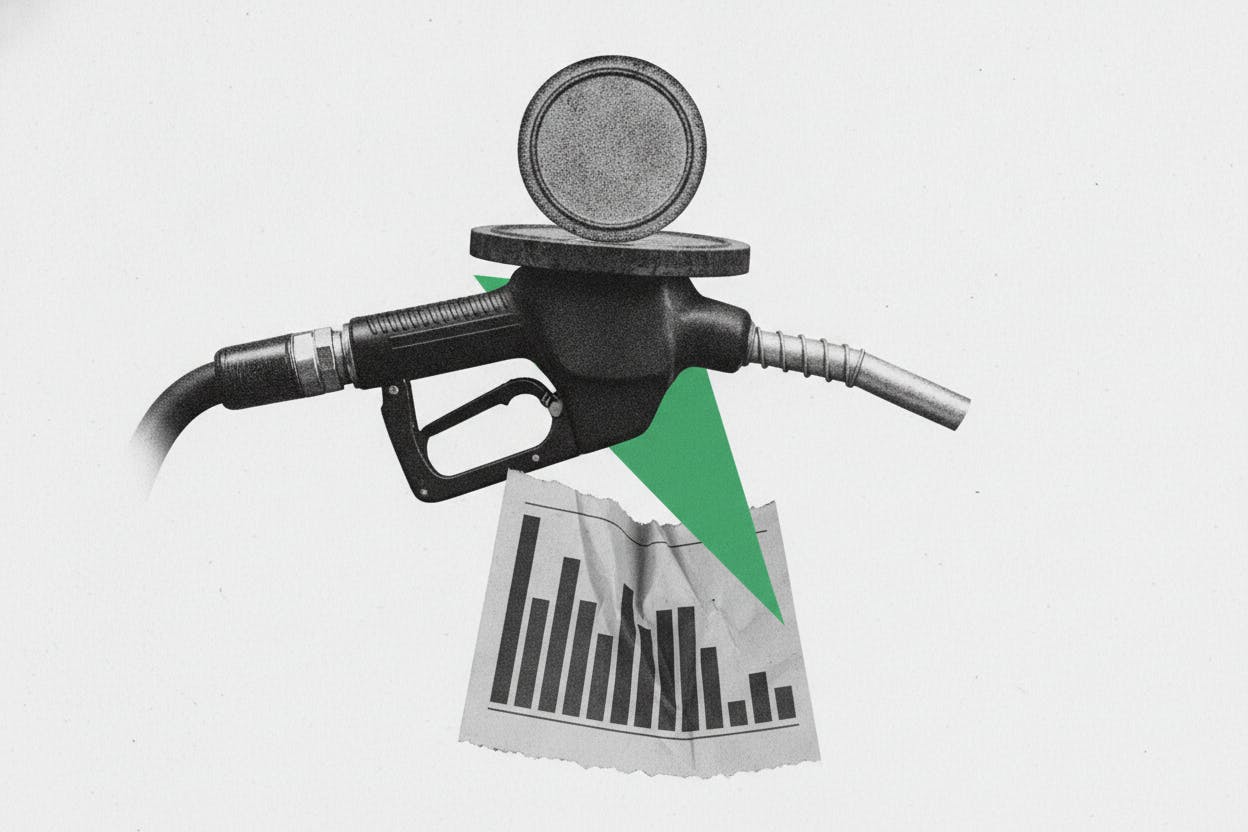
China's economic planner, the National Development and Reform Commission (NDRC), announced its steepest reduction in gasoline and diesel price ceilings in more than six years, effective Saturday. The move comes as global oil prices have fallen and a sharp drop in crude imports signals that demand in the world's largest oil importer is cooling.
Gasoline ceiling prices will drop by 950 yuan ($140) per metric ton to 8,175 yuan per ton, while diesel caps fall by 915 yuan per ton to 7,170 yuan per ton. The NDRC reviews a basket of international crude prices every 10 working days and sets retail price ceilings that also account for taxes, distribution costs, and an appropriate profit margin. So the cut primarily reflects cheaper crude on global markets.
Why Oil Prices Are Falling
Brent crude and West Texas Intermediate (WTI) have slid to their lowest levels since before the latest tensions in the Strait of Hormuz, as concerns about supply disruptions have eased. Oil Prices Steady as Tankers Clear Strait of Hormuz, Market Flips to Contango highlights how shipping traffic has normalized, reducing the risk premium that had been baked into prices.
But the bigger story is on the demand side. China's crude imports fell 29% in May compared to the same month last year, hitting their lowest level in eight years, according to Reuters. Analysts estimate that domestic fuel use—including gasoline—was roughly 20% lower. That weakness is showing up in corporate outlooks as well. State-owned refiner Sinopec expects demand for gasoline, diesel, and jet fuel to fall around 10% year-on-year in the second and third quarters. S&P Global Commodity Insights projects a similar decline for the second quarter.
What It Means for Investors
The 950-yuan-per-ton cut is more than just a break for Chinese drivers at the pump. It confirms that China's pricing mechanism is pulling retail caps lower because global crude is cheaper and domestic consumption is soft. When demand weakens, refiners cannot rely on higher volumes to offset lower pump-price revenue. They typically respond by trimming refinery runs and letting inventories draw down. The knock-on effect is fewer crude purchases.
That is why a 29% year-on-year drop in imports matters beyond a single month's data. It can limit upside for Brent and WTI, especially once supply-risk headlines fade. For investors in energy stocks or commodities, this is a signal that China's economic slowdown is starting to bite into oil demand. The broader context includes China's Private Sector Growth Slows in June as Export Orders Surge, which shows that while exports remain strong, domestic activity is losing momentum.
The weakness is also visible in other parts of the economy. China Services PMI Slips to 54.1 in June as Export Orders Surge indicates that the services sector, while still expanding, is growing at a slower pace. And BYD Leads China's June NEV Sales with Record Exports as Domestic Demand Cools shows that even in the booming electric vehicle market, domestic demand is cooling even as exports surge.
Broader Market Implications
The fuel price cut also has implications for inflation and consumer spending. Lower gasoline prices can reduce transportation costs and put more money in consumers' pockets, potentially boosting other areas of spending. However, if the price cut is driven by weak demand rather than a supply glut, it may signal broader economic headwinds.
For global oil markets, the key question is whether China's demand weakness is temporary or part of a longer-term trend. The 29% import drop in May was partly due to refinery maintenance and a high base from last year, but the sustained decline in fuel use suggests structural factors are at play. Investors will be watching upcoming economic data and refinery runs for clues about whether the trend continues.
The NDRC's next price review in 10 working days will provide another data point. If global crude prices remain low and Chinese demand stays soft, further cuts could be on the horizon. For now, the message from Beijing is clear: the world's biggest oil importer is feeling the chill of a cooling economy, and that is showing up at the pump.